The gist:
- Cracked finish, deep scratches, water stains, and persistent squeaks are the clearest signals that commercial hardwood needs professional attention.
- Acting early on worn flooring reduces safety hazards and avoids the higher cost of full plank replacement.
- Restoration methods differ from routine refinishing, especially for older or historic commercial buildings in Baltimore, MD.
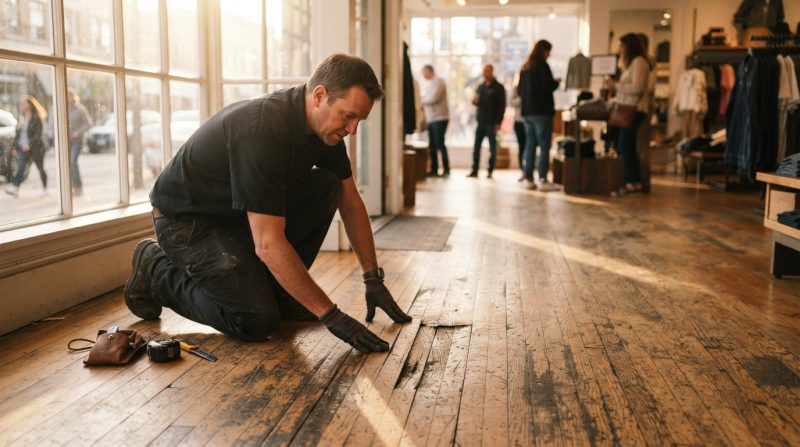
Business owners typically notice a need for floor repair when finish wears thin, boards cup or gap, or foot traffic patterns leave visible dulling across high-use areas. These changes affect both appearance and safety, and they tend to worsen without timely action.
Commercial hardwood takes a different kind of abuse than residential flooring. Daily foot traffic, rolling carts, spilled liquids, and fluctuating humidity in retail spaces, offices, and older commercial buildings all accelerate wear. When finish fails or boards shift, Master Care Flooring restoration addresses the underlying wood rather than masking surface-level damage.
Visible Signs That Point to Restoration
Several physical indicators separate a floor that needs routine cleaning from one that requires structural attention.
- Deep scratches or gouges that catch on shoe soles or furniture legs
- Cupping, crowning, or visible gaps between boards
- Water stains, dark discoloration, or soft spots near entryways and restrooms
- Finish that has worn through to bare wood in high-traffic lanes
- Persistent squeaking or movement underfoot even after minor repairs
Any one of these signs alone may not demand immediate action, but a combination of two or more usually means the wood’s protective layer has failed. At that point, surface cleaning or spot sanding will not resolve the underlying problem.
Why Commercial Settings Wear Floors Faster
Foot traffic volume is the primary driver of wear in retail stores, restaurants, and office lobbies. Unlike a home hallway, a commercial entryway may see hundreds of footsteps daily, along with grit, moisture, and temperature swings tied to frequent door use.
The Occupational Safety and Health Administration maintains standards for walking and working surfaces because uneven or damaged flooring contributes to slip and trip hazards in workplaces. Deteriorated hardwood that has cupped, split, or developed loose boards falls squarely into the kind of surface condition these guidelines address. Businesses that delay repair risk both liability exposure and a less durable floor once damage reaches the subfloor.
Restoration Versus Routine Refinishing
Not every worn floor needs a full restoration. The distinction matters for budgeting and scheduling repair work around business hours.
| Condition | Routine Refinishing | Full Restoration |
|---|---|---|
| Surface dulling, light scuffs | Suitable | Not required |
| Deep gouges, water stains | Insufficient | Recommended |
| Board cupping or gaps | Insufficient | Recommended |
| Historic or original hardwood | Case-by-case | Often required |
Older commercial buildings, including many in Baltimore, MD with original hardwood dating back decades, often need a restoration approach rather than a simple sand-and-coat refinish. Historic boards can have variable thickness, old nail patterns, or species no longer commonly milled, all of which affect how aggressively a floor can be sanded without weakening it.
How to Respond Once Damage Is Confirmed
Once visible wear or structural signs appear, a practical response follows a short sequence rather than a single fix.
- Document the affected areas with photos and note where traffic or moisture exposure is heaviest.
- Schedule an inspection to determine whether damage is cosmetic or has reached the subfloor.
- Compare refinishing versus restoration based on board condition and wood age.
- Plan the work around business hours to limit disruption to customers or staff.
Business owners managing a storefront or office in Baltimore, MD benefit from addressing these signs before a slip hazard or structural issue forces an unplanned closure.
Frequently Asked Questions
How often should commercial hardwood floors be inspected? High-traffic commercial spaces generally benefit from a visual inspection every few months, with closer attention near entrances and spill-prone areas.
Can a floor with water stains always be restored instead of replaced? It depends on how far moisture has penetrated; surface staining is often treatable, but boards that have swelled or rotted at the subfloor may need partial replacement.
Is historic hardwood harder to restore than standard flooring? Yes, older or historic boards often require more careful sanding and matching finishes due to variable wood thickness and species no longer widely available.
Does a squeaky floor always mean structural damage? Not always; squeaks can result from loose fasteners or seasonal wood movement, but persistent noise paired with visible wear warrants a closer inspection.
Baltimore, MD business owners evaluating commercial flooring conditions can review location and contact information through Master Care Flooring, which maintains a published profile for the area.
Next Steps for Facility Assessment
Readers can Contact Master Care Flooring for published location and contact details.