In brief:
- A French drain redirects surface and shallow groundwater away from foundations, yards, and driveways using a gravel-filled, perforated pipe trench.
- Virginia Beach’s clay-heavy soil and flat terrain make standing water and slow-draining yards common after storms.
- Professional design accounts for slope, outlet placement, and pipe depth, since a poorly built system can worsen pooling instead of fixing it.
Standing water that lingers in a yard for more than a day after rain is one of the clearest signs that a property needs better subsurface drainage. French drainage works by channeling that water through a buried, gravel-wrapped pipe system and moving it to a safer discharge point before it reaches a foundation, patio, or crawl space.
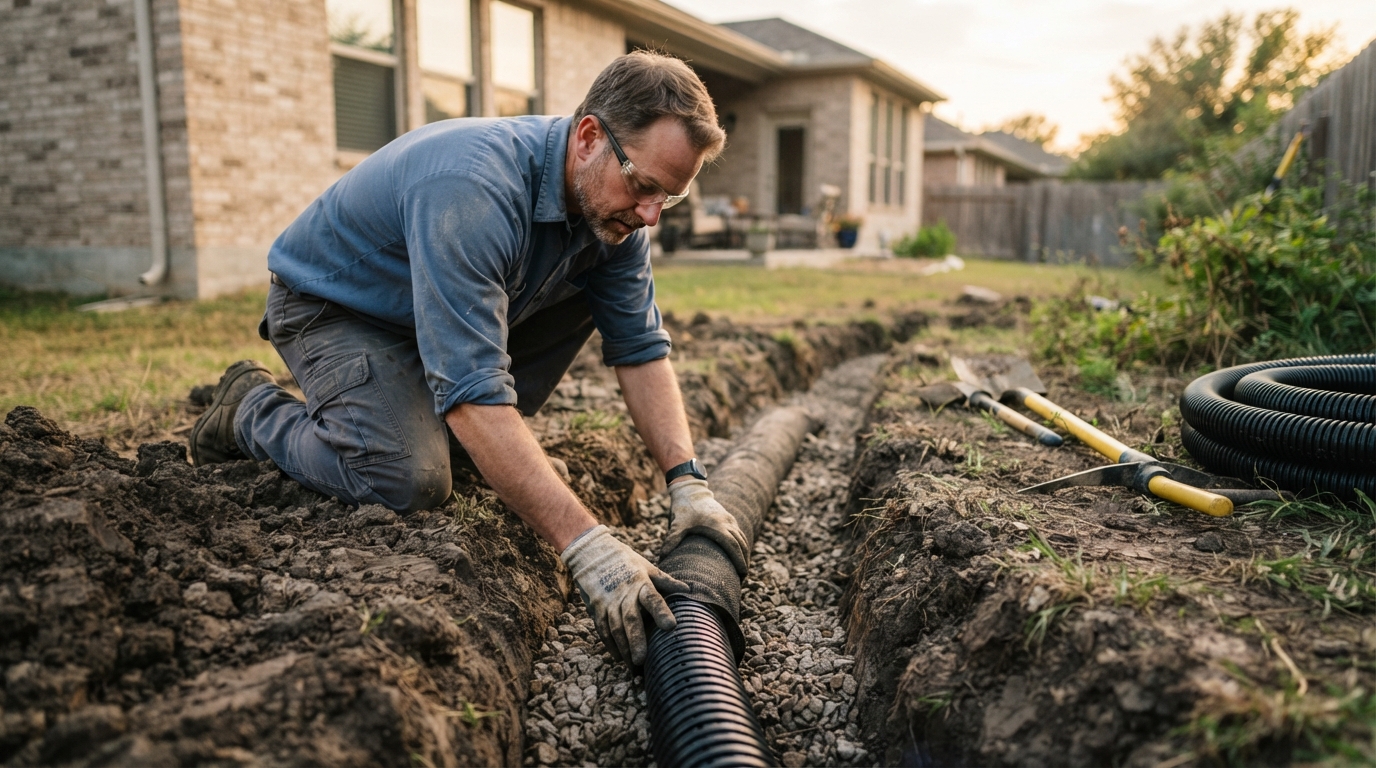
A French drain is typically a trench lined with filter fabric, filled with gravel, and fitted with a perforated pipe to collect and redirect water moving through or beneath the soil. French drainage services in Virginia Beach can help manage excess groundwater and reduce drainage issues around residential properties. Proper installation relies on consistent pipe slopes and a suitable outlet to direct collected water away from the property without affecting neighboring lots.
Why Yards Flood in Flat, Clay-Heavy Soil
Virginia Beach sits on low-lying, largely flat terrain with soil that often has a high clay content, a combination that slows natural water absorption. Clay particles are dense and tightly packed, so rainfall tends to sit on the surface rather than soaking in, which is why puddles can remain in low spots for days after a storm passes.
This condition is well documented in regional engineering guidance. A federal resource on site drainage explains that general guidance for constructing a swale to divert water away from the house applies when drain pipe is installed under pavers, stone, turf, or mulch at low points in the yard, a type of underground drainage often referred to as a French drain. The same guidance notes that a French drain contains a perforated drain pipe wrapped in rock and landscape fabric, which is the structural basis for how these systems intercept and redirect water.
Common signs a property may need this kind of drainage correction include:
- Soggy or spongy turf that stays wet well after surrounding areas have dried
- Water pooling against a foundation wall or crawl space vent
- Erosion channels forming across a slope after heavy rain
- A sump pump that runs frequently during wet seasons
Comparing Common Drainage Approaches
Property owners facing recurring water issues often compare several options before choosing one. Each method solves a slightly different problem, and some work best in combination with others.
| Drainage Method | Primary Function | Best Suited For |
| French drain | Intercepts and redirects subsurface and shallow surface water | Soggy yards, foundation perimeters, sloped lots |
| Catch basin | Collects surface water at a single inlet point | Low spots where water visibly pools |
| Grading/regrading | Reshapes land to direct runoff away from structures | Yards where the slope pushes water toward the house |
| Downspout extension | Moves roof runoff away from the foundation | Homes where gutters discharge too close to the walls |
A French drain is frequently paired with grading or downspout work, since correcting surface slope alongside a subsurface system addresses both where water travels and where it collects.
Installation Depth, Slope, and Long-Term Maintenance
Residential systems are generally installed between 18 and 24 inches deep, which is typically enough to intercept shallow groundwater without disturbing deeper utility lines. The trench needs a steady downward slope toward its outlet, since a flat or uneven run will allow sediment to settle and the pipe to lose effectiveness over time.
Maintenance requirements are modest but matter for longevity. A state environmental guidance document on yard drainage recommends clearing out any debris, leaf litter, rodent nests, and similar material on a regular basis, along with annual checks to confirm the system still functions and is not redirecting water onto a neighboring property.
Frequently Asked Questions
How long does a French drain take to install? Timelines vary with trench length, soil conditions, and outlet distance, but most residential projects are completed within a few days once the design and utility locates are finished.
Can a French drain fix a wet basement on its own? A yard-level French drain manages surface and shallow groundwater, but it is not designed to resolve hydrostatic pressure against a foundation wall; that typically requires an interior perimeter drain or sump system.
Does Virginia Beach have rules about where drainage can discharge? Local stormwater and grading requirements govern where a drain outlet can release water, so checking with the appropriate local authority before installation helps avoid discharge onto a neighbor’s property or a public right-of-way.
How often does a French drain need maintenance? Annual inspection plus periodic clearing of leaf litter and sediment from inlets and cleanouts keeps most systems working as designed for many years.
Based in Chesapeake, VA, Rain Drains provides drainage design and installation work for properties across Virginia Beach.