Essentially:
- A stair lift for elderly homeowners allows safe, seated access between floors without relying on a caregiver for every trip.
- Installation typically follows a home assessment to match the lift to the staircase shape, width, and weight requirements.
- Keeping existing stairs usable helps older adults stay in their current home rather than relocating to single-level housing.
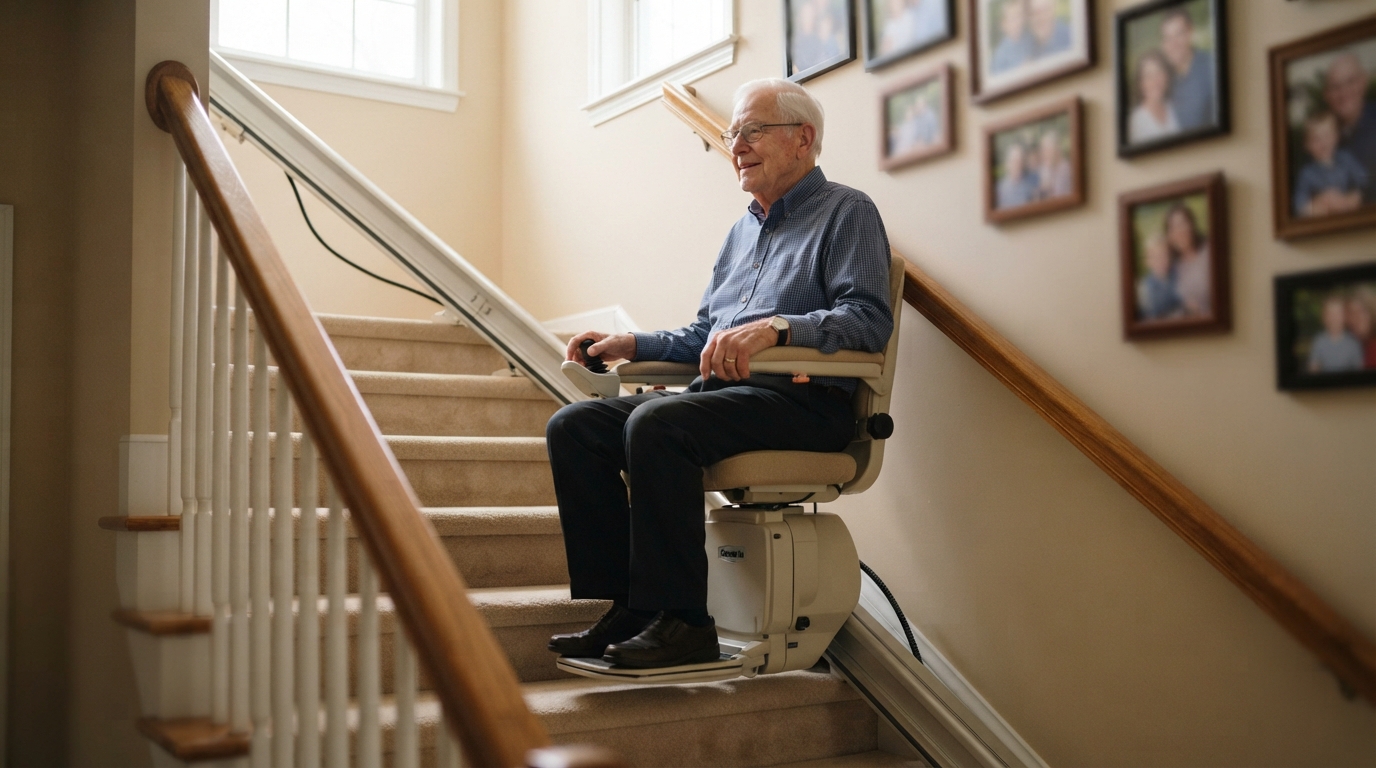
A stair lift for elderly homeowners is a motorized seat that travels along a rail mounted to the stairs, carrying a person safely between floors without climbing steps. For many older adults in multi-level homes, this single modification can be the difference between staying in a familiar house and moving out of it.
Falls on stairs remain one of the more serious risks for older adults living in multi-story homes, and reduced mobility, balance issues, or recovery from surgery can make daily trips up and down increasingly difficult. A stair lift for elderly residents addresses this directly by removing the physical strain of climbing while keeping the rest of the home layout unchanged. Rather than restructuring a house or adding a ground-floor bedroom, the staircase itself becomes accessible again.
According to the CDC’s older adult fall prevention program, falls are a leading cause of injury among older adults, and home modifications are among the strategies recommended to reduce that risk. Stair lifts fit into this category of practical, non-structural changes that address a specific hazard point in the home.
How a Stair Lift Works in a Home Setting
A stair lift consists of a rail secured to the stair treads or wall studs, a motorized chair or platform, and controls operated by the user. The seat moves along a fixed track, usually at a slow, steady pace, and most models include a swivel seat at the top landing for safer entry and exit.
Key components typically include:
- A rail custom-fitted to the staircase angle and turns, whether straight or curved
- A seat with armrests, a seatbelt, and a footrest that folds when not in use
- Battery backup so the lift continues to operate during a power outage
- A call-and-send remote allowing the chair to be summoned from either floor
Straight staircases generally require a standard rail, while staircases with landings, turns, or varying widths need a custom-curved rail. This distinction affects both the installation process and the overall footprint of the equipment on the stairs.
Assessing Whether a Home Qualifies
Not every staircase is identical, and a proper assessment typically looks at stair width, weight limits, available power outlets near the stairs, and the layout of turns or landings. Many homes in Lawrenceville, GA feature standard residential staircases that accommodate common stair lift models without major modification.
Homeowners considering a stair lift should review:
1. Staircase width and whether it meets the minimum clearance for the chair and folded footrest
2. The presence of a nearby electrical outlet for charging the battery system
3. Any turns, landings, or doorways at the top or bottom of the stairs
4. The user’s weight and mobility needs, since seat and platform models vary in capacity
A professional walkthrough is the most reliable way to confirm these details before ordering equipment, since measurements taken without an in-person visit can miss structural factors that affect rail placement.
Comparing Stair Lift Types
| Type | Best For | Rail Shape |
| Straight rail | Single-flight staircases with no turns | Fixed, straight track |
| Curved rail | Staircases with landings, bends, or spiral sections | Custom-built to match the staircase |
| Outdoor lift | Exterior steps leading to a porch or entryway | Weather-resistant straight or curved track |
Straight rail systems are generally simpler to install and ship faster, while curved systems require precise measurements and a longer lead time because each rail is manufactured for that specific staircase.
Aging in Place Without Relocating
Many older adults prefer to remain in a home they already know rather than move into an assisted living facility or a single-story rental. A stair lift supports that preference by keeping both floors of a house usable, which matters in homes where bedrooms, laundry rooms, or bathrooms are located upstairs. Based in Decatur, GA, DOC Development Inc serves customers across Lawrenceville, GA, where many homes share this kind of multi-level layout.
Frequently Asked Questions
How long does a stair lift installation usually take? Straight rail installations are often completed in a single day, while curved rail systems can take longer due to custom manufacturing and more complex mounting.
Does a stair lift require permanent changes to the staircase? Rails are secured to the stair treads or a nearby wall using brackets, and most systems can be removed later without significant repair work to the stairs themselves.
Can a stair lift be used by someone in a wheelchair? Standard stair lifts are seated systems for ambulatory users who need help on stairs; a separate wheelchair platform lift is used for individuals who cannot transfer out of a wheelchair.
Is a power outage a safety concern for stair lift users? Most residential stair lifts include a battery backup that keeps the unit operational for a number of trips even if household power is interrupted.
Looking Into Local Options
Specific details about scheduling, service area coverage, and current availability for DOC Development Inc are published online for homeowners comparing stair lift options in the area.