Bottom line:
- Properly installed commercial lighting reduces energy waste, supports code compliance, and lowers long-term operating costs.
- California’s updated Title 24 lighting standards affect permitted lighting work in San Dimas, CA, starting with 2026 permit applications.
- Professional installation addresses wiring, controls, and fixture placement together, rather than treating lighting as a simple swap.
Business owners searching for guidance on lighting upgrades usually want to know whether the investment pays off and what counts as proper installation versus a basic fixture swap. Commercial Lighting Installation in San Dimas, CA, involves more than screwing in new bulbs: it includes electrical load calculations, control-system wiring, and code-compliant placement that affects safety, energy bills, and how a space functions day to day. Skipping these steps can lead to uneven lighting, circuit overloads, or installations that fail inspection.
Many property owners assume any licensed electrician can handle a lighting project the same way. In practice, commercial spaces have different wiring demands, occupancy patterns, and code requirements than residential buildings, which makes planning and sequencing matter as much as the fixtures themselves.
What Proper Installation Actually Involves
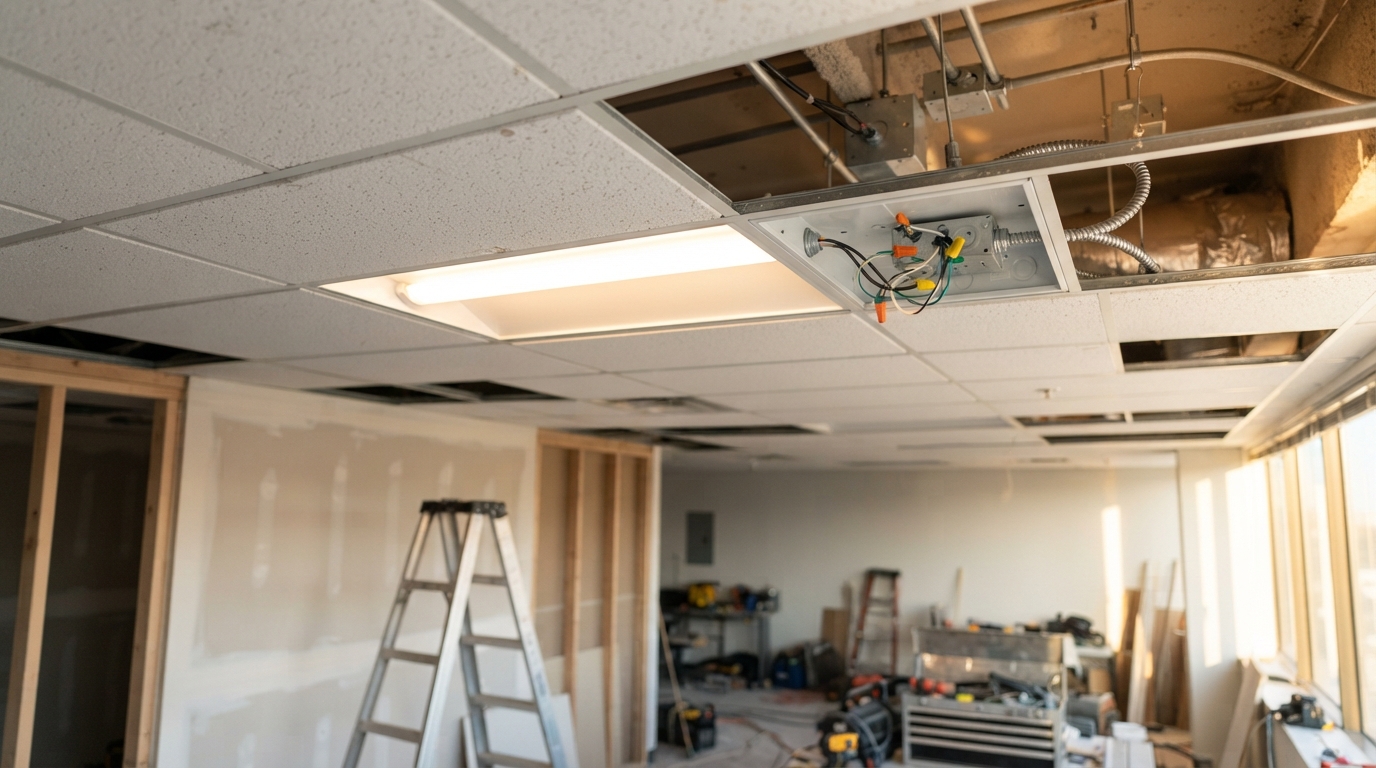
A compliant lighting project is rarely just fixture replacement. It typically includes several coordinated steps:
- Load assessment to confirm existing panels and circuits can support new fixtures
- Layout planning that matches lighting levels to the function of each space
- Control wiring for dimmers, occupancy sensors, or daylight harvesting systems where required
- Final inspection and documentation to confirm the work meets local building code
Skipping any of these steps can create safety hazards or trigger failed inspections during permitting.
Why Installation Quality Affects Operating Costs
Energy use tied to lighting is one of the more controllable line items in a commercial utility bill, and installation quality determines whether upgraded fixtures actually deliver their rated savings. Loose connections, mismatched drivers, or poorly placed sensors can offset the efficiency gains that newer LED fixtures are designed to provide.
California’s lighting code also adds a compliance layer that affects project cost and scope. Under the 2025 Title 24 Building Energy Efficiency Standards, permit applications filed on or after January 1, 2026 must meet updated lighting power density limits and control requirements for commercial buildings. Projects that are planned and wired correctly the first time avoid the cost of retrofitting controls later to meet these thresholds.
Comparing Installation Approaches
Facilities undergoing a full installation project are better positioned to pass inspection on the first attempt and to avoid follow-up electrical work within a few years of the original upgrade.
Planning for San Dimas, CA Facilities
Commercial properties in San Dimas, CA are subject to the same state-level Title 24 lighting requirements that apply across California, which means permitted lighting work filed after January 1, 2026 must meet the updated power density and control standards. Building owners planning renovations, tenant improvements, or new construction should factor these requirements into project timelines rather than treating them as a late-stage compliance check. Based in USA, SEPIA Energy serves customers across San Dimas, CA, working within these state code requirements on commercial lighting and tenant improvement projects.
Frequently Asked Questions
Does every lighting upgrade require a permit? Permit requirements depend on the scope of work and local building department rules; projects involving new wiring, panel changes, or structural modifications typically require permitting, while simple fixture replacement may not.
How long does a commercial lighting installation take? Timelines vary based on the size of the space, the number of fixtures, and whether control systems or panel upgrades are part of the scope.
What happens if lighting work does not meet Title 24 standards? Work that does not meet current standards can fail inspection, delaying occupancy or tenant move-in until corrections are made.
Is LED retrofitting the same as full installation? Retrofitting typically replaces lamps or fixtures within existing wiring, while full installation includes wiring, controls, and layout changes to meet current code and usage needs.
Business Info
SEPIA Energy lists lighting and tenant improvement work, including LED lighting installations and retrofits, tenant electrical modifications, and power and wiring upgrades, among its commercial electrical services.
A Note on Next Steps
Project-specific details for SEPIA Energy are published for reference by property owners reviewing lighting and tenant improvement work.