Recap:
- Landscaping stones vary by type, size, and drainage performance, and choosing the right one depends on the project (walkway, border, drainage bed, or wall).
- Delivery volume, grading, and site prep affect total project cost more than the stone itself.
- Homeowners in North Branford, CT should factor in slope, soil type, and local drainage rules before ordering material.
Choosing landscaping stones comes down to matching stone type, size, and drainage capability to the specific job, whether that is a dry creek bed, a patio base, or a retaining wall. Picking the wrong material often costs more in the long run through erosion, poor compaction, or added labor to fix drainage issues.
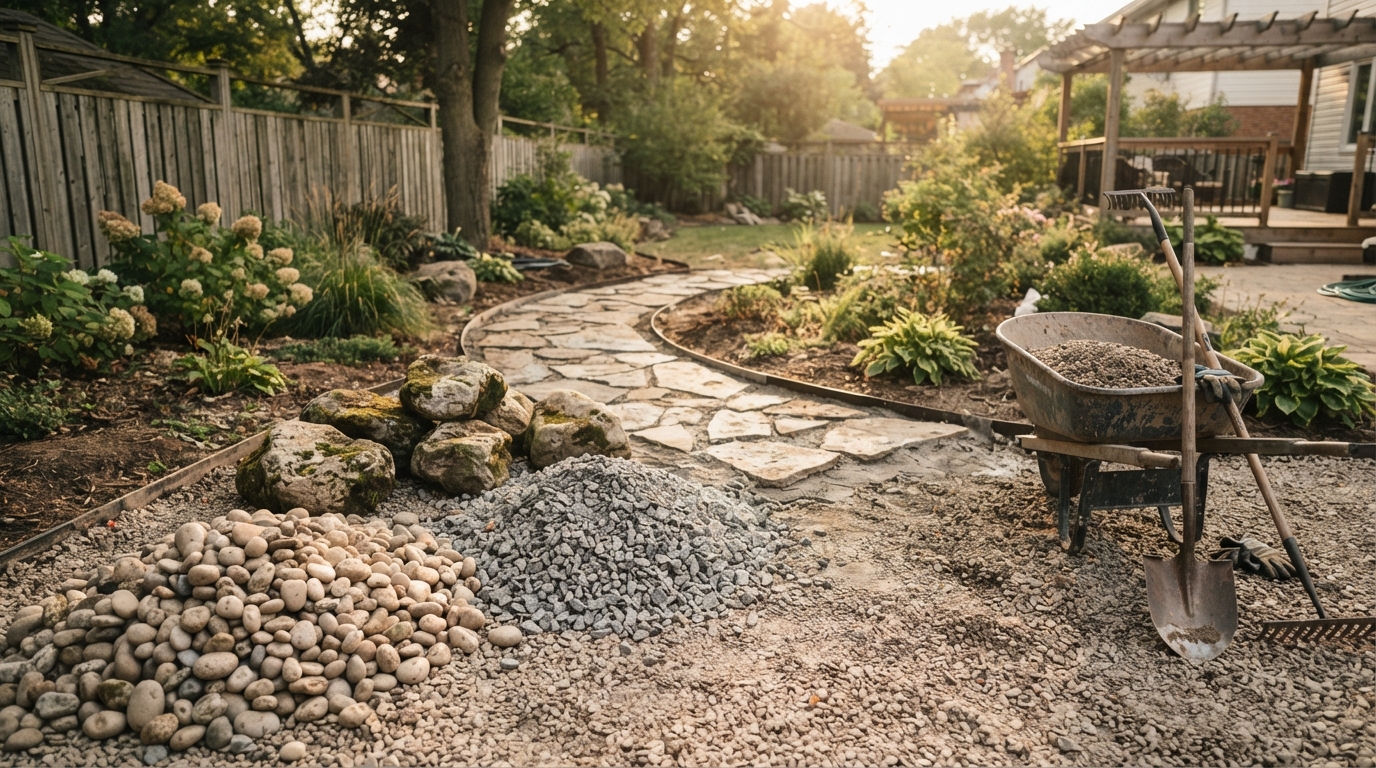
Landscaping stones are sold in several forms, and each one serves a different structural or decorative purpose at Modern Materials Corporation. Crushed gravel compacts well for pathways and driveway bases, while round washed stone is better suited for drainage beds and decorative borders because it does not lock together as tightly. Larger boulders and traprock are typically used for retaining walls, accent features, or erosion control on sloped yards.
Common Stone Types and Their Best Uses
Not every stone product works for every application. Matching the material to the job reduces waste and prevents costly redo work.
| Stone Type | Best Use | Drainage Performance |
| Crushed gravel | Pathways, driveway base | Moderate, compacts well |
| Round washed stone | Drainage beds, borders | High, loose fill |
| Traprock | Walls, erosion control | Low to moderate |
| Decorative boulders | Accent features, slopes | Low, structural use |
- Crushed gravel is the most common choice for walkways because it locks together under foot traffic and vehicle weight.
- Round stone resists compaction, which makes it useful where water needs to pass through quickly.
- Larger stone and boulders anchor sloped areas and reduce surface erosion during heavy rain.
Site Conditions That Affect Stone Selection
Soil drainage, slope, and seasonal freeze-thaw cycles all influence which stone performs best over time. Homes in North Branford, CT often deal with clay-heavy soil pockets and seasonal runoff, both of which affect how quickly water moves through a stone bed.
- Flat or minimally sloped areas generally handle permeable stone surfaces better than steep grades.
- Poor natural drainage may require added depth or an underdrain beneath the stone layer.
- Heavy spring rainfall can overwhelm shallow stone beds that were not sized for the site’s runoff volume.
According to UMD Extension guidance on permeable hardscapes, permeable surfaces should be installed on flat or minimally sloped areas and checked for an infiltration rate before installation. This kind of site assessment applies directly to stone drainage beds, dry creek beds, and gravel walkways planned for yards with uneven grading.
Estimating Quantity and Cost Factors
Stone is typically priced and delivered by volume, so measuring the project area accurately before ordering prevents both shortages and excess material sitting unused.
- Measure the length, width, and intended depth of the area in feet.
- Convert the total cubic footage to cubic yards, since most suppliers sell and deliver by the yard.
- Add 10 to 15 percent extra material to account for compaction and uneven coverage.
- Confirm whether delivery includes spreading or only drop-off at the property line.
Bulk orders generally cost less per yard than bagged stone from a retail store, particularly for driveway bases, drainage projects, or larger patio installations.
Frequently Asked Questions
How much landscaping stone do I need for a 100-square-foot area? At a standard 2-inch depth, 100 square feet requires roughly 0.6 cubic yards of stone, though exact totals vary by stone size and compaction rate.
Does landscaping stone help with drainage problems? Stone beds can improve surface drainage when sized and placed correctly, but persistent standing water usually points to a grading or soil issue that stone alone will not fix.
What is the difference between crushed stone and round stone? Crushed stone has angular edges that lock together for stable surfaces like paths, while round stone stays loose and is better for drainage or decorative fill.
Can landscaping stone be installed over existing soil? Most installations require removing sod and adding a compacted base or landscape fabric first to prevent the stone from sinking or mixing into the soil below.
Local Sourcing Notes
Modern Materials Corporation is based in Hamden, CT and serves customers across North Branford, CT. The business operates as a landscaping material supplier, with decorative stone listed among its material offerings.
Current product availability and delivery details for modernmaterialscorp.com are published for the service area.