Key takeaway:
- A full pool renovation typically involves structural inspection, resurfacing or re-tiling, equipment upgrades, and a final inspection before refill.
- Permit requirements in South Carolina vary by jurisdiction and pool type, with additional oversight for shared or commercial pools.
- Project timelines depend on scope, weather, and whether plaster, tile, or equipment replacement is involved.
A full pool renovation generally restores an aging pool’s structure, surface, and equipment to extend its usable life and improve safety and efficiency. The process moves through distinct phases, from inspection and draining to resurfacing, equipment updates, and refilling, each with its own timeline and considerations.
Homeowners researching Pool Renovation often want to know what the process actually involves before committing to a contractor or a budget. Understanding each phase helps set realistic expectations for cost, downtime, and the condition the pool will be in once work is complete.
Initial Assessment and Planning
Before any physical work begins, a contractor typically evaluates the pool’s structural condition, plumbing, and existing equipment. This step identifies cracks, surface delamination, outdated filtration systems, or drainage issues that could affect the renovation scope.
Common items reviewed during this phase include:
- Shell condition (cracks, discoloration, rough texture)
- Tile and coping wear
- Pump, filter, and heater age and function
- Deck surface condition and drainage
In South Carolina, permit requirements for structural or mechanical changes to an existing pool depend on the local building department, and shared or community pools may fall under additional state oversight. According to the South Carolina Department of Health and Environmental Control pool regulations, public and semi-public pools are subject to permitting and inspection requirements that differ from single-family residential pools.
Draining, Demolition, and Surface Work
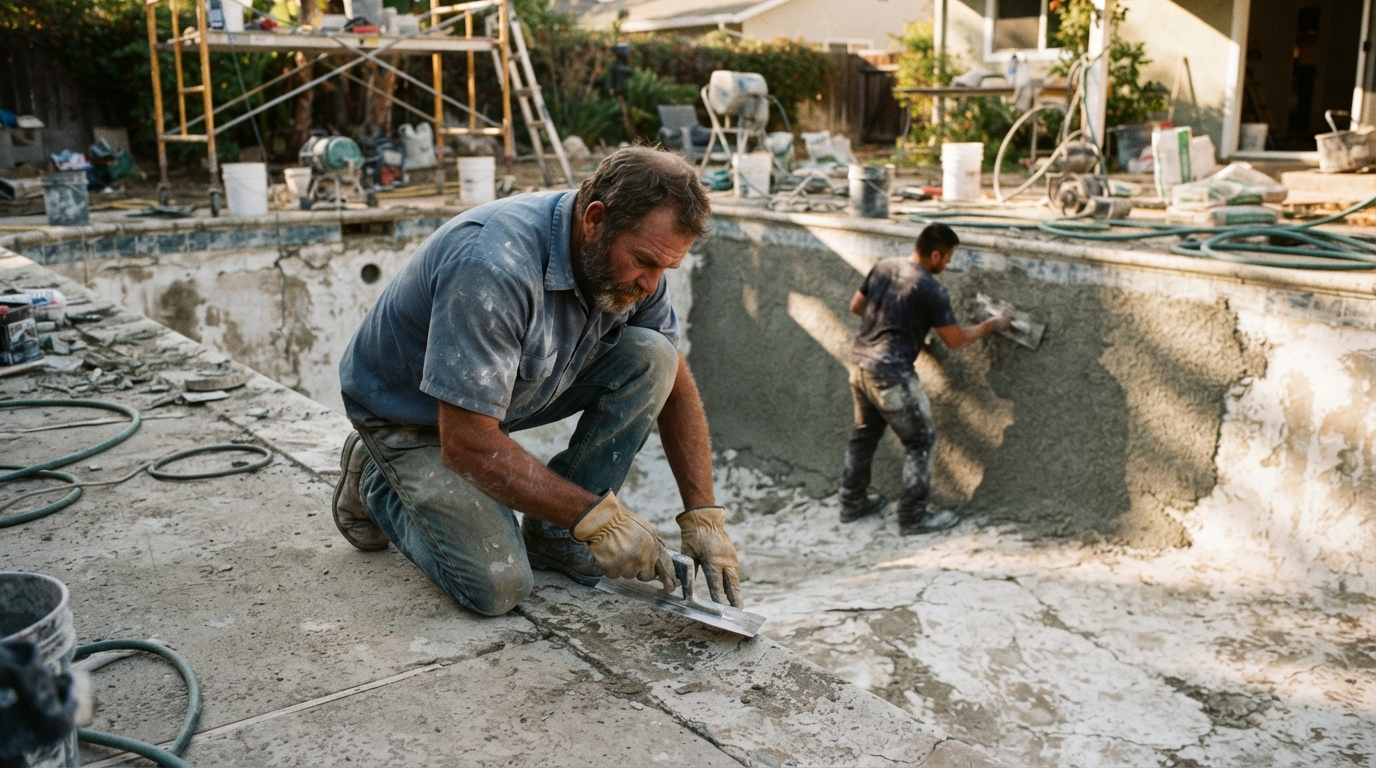
Once a plan is set, the pool is drained and prepared for surface removal. Old plaster, tile, or coping is chipped away to expose the underlying shell, allowing technicians to repair cracks or structural weak points before new material is applied.
Surface replacement options vary in cost, durability, and appearance:
| Surface Option | Typical Lifespan | Maintenance Level |
| Standard plaster | 7 to 10 years | Moderate |
| Pebble or aggregate finish | 12 to 20 years | Lower |
| Tile (full or accent) | 20+ years | Low to moderate |
Re-plastering and re-tiling are among the most requested renovation services because they directly affect water clarity and the pool’s visual condition. Coping and deck repairs are often addressed in the same phase to avoid reopening the work area later.
Equipment Upgrades and System Checks
Many renovation projects include updates to pumps, filters, heaters, or automation systems, particularly when the existing equipment is more than a decade old. Replacing outdated equipment during a renovation avoids the cost of a separate future project and can improve energy efficiency.
Typical equipment-related updates include:
1. Variable-speed pump installation
2. Filter system replacement or upgrade
3. Heater inspection or replacement
4. Automation or control system updates
Electrical bonding and wiring for pool equipment must meet applicable code requirements, which is one reason licensed contractors coordinate this phase with local inspectors when required.
Refilling, Balancing, and Final Inspection
After surface and equipment work is complete, the pool is refilled and water chemistry is balanced before regular use resumes. Plaster and pebble finishes require a specific curing period, during which water chemistry must be monitored closely to prevent staining or surface damage.
Depending on the jurisdiction and pool classification, a final inspection may be required before the pool reopens for regular use. Based in Ladson, SC, Click here for Pool Renovation serves customers across Seabrook Island, SC, where older pools built decades ago are common candidates for structural and cosmetic renovation work.
Frequently Asked Questions
How long does a full pool renovation usually take? Timelines vary based on scope, but surface and equipment work combined often takes several weeks, factoring in curing time for new plaster or pebble finishes.
Is a permit always required for pool renovation work? Permit requirements depend on the pool’s classification and local jurisdiction, with shared or commercial pools generally facing more oversight than single-family residential pools.
Can equipment be upgraded without replacing the pool surface? Yes, equipment such as pumps, filters, and heaters can often be replaced independently, though combining upgrades with surface work can reduce overall disruption.
What signs indicate a pool needs renovation rather than routine repair? Persistent cracking, rough or flaking plaster, visible rebar, or recurring equipment failures typically signal that renovation is more appropriate than isolated repairs.
A full pool renovation touches structure, surface, and equipment, so understanding each phase helps homeowners plan for the time and coordination involved. Current service area information for Click here for Pool Renovation is available for residents evaluating renovation timelines and scope.