Bottom line:
- Musty odors, discolored patches, warped surfaces, and recent water damage are the clearest signs mold may be developing in a Temecula home.
- Dry conditions in the Temecula Valley can still allow mold to form quickly after leaks, roof damage, or poor ventilation in bathrooms and crawl spaces.
- Professional testing and remediation address both visible growth and hidden moisture sources that cause it to return.
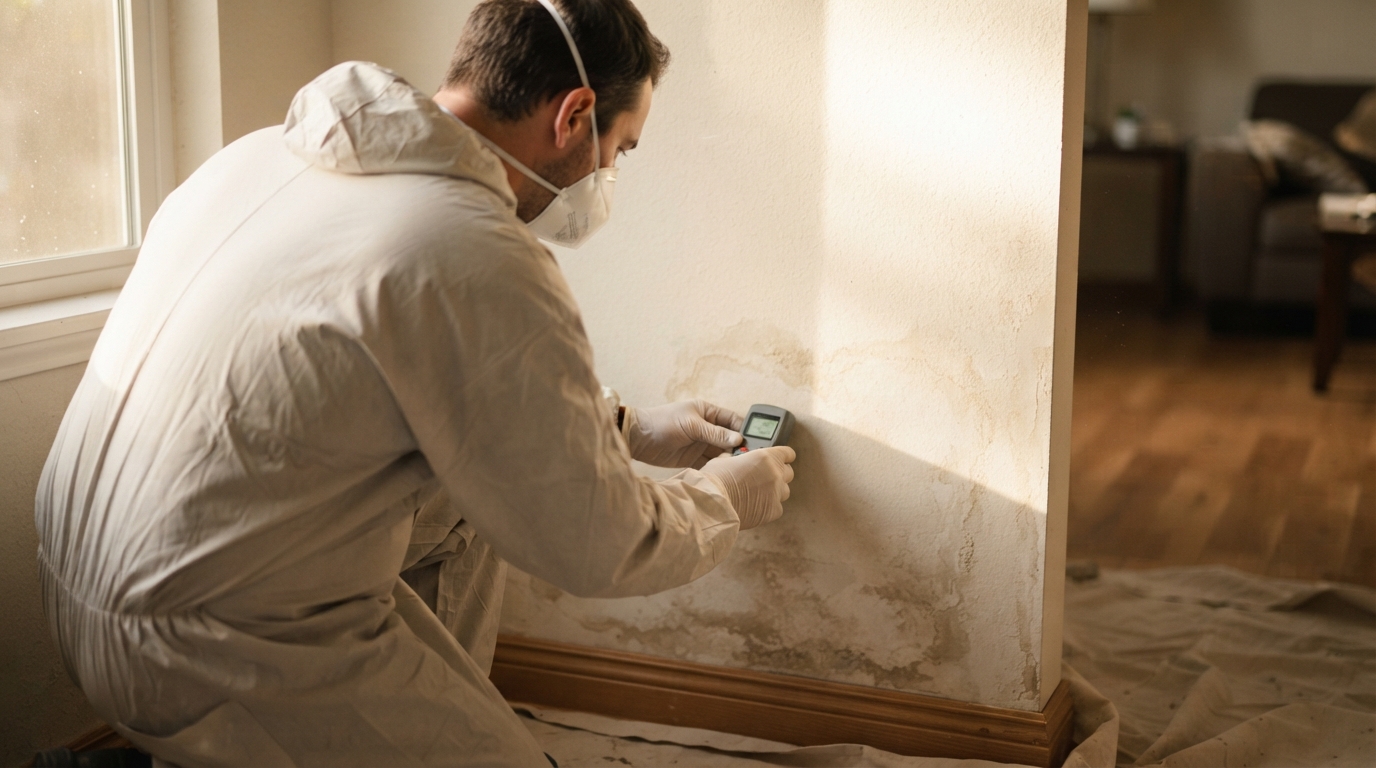
A musty smell, discolored wall patches, or recent water intrusion are the most reliable indicators that a property needs professional attention. If these signs appear alongside visible spotting on drywall, baseboards, or ceilings, schedule Mold Remediation in Temecula, CA, before the growth spreads to structural materials.
Temecula’s warm, dry climate does not eliminate mold risk. Homes with recent plumbing leaks, roof damage, or poor bathroom ventilation can develop colonies within days once moisture becomes trapped behind walls or under flooring. According to the EPA’s guide to mold and moisture, the key to mold control is moisture control, and you should dry water-damaged materials within 24 to 48 hours to prevent growth from taking hold.
Common Warning Signs Inside a Temecula Home
Mold does not always announce itself with obvious patches of color. Several signs point to a developing problem before visible growth spreads.
- Persistent musty odor that lingers even after cleaning, especially near bathrooms, laundry rooms, or crawl spaces.
- Discoloration on walls, ceilings, or baseboards, often appearing as dark spots, green tinges, or black speckling.
- Warped, bubbling, or peeling surfaces on drywall, wood trim, or flooring near a past or current water source.
- Condensation buildup on windows or pipes, which signals excess indoor humidity that can feed mold growth.
- Unexplained allergy or respiratory symptoms that improve when residents leave the home, which may indicate airborne spores.
Any one of these signs alone may not confirm an active infestation, but several appearing together usually warrants a closer look at the property’s moisture history.
Where Mold Tends to Develop First
Mold growth concentrates in areas where moisture collects, and air circulation is limited. Recognizing these zones helps property owners catch problems early.
- Bathrooms and laundry rooms with inadequate exhaust ventilation.
- Attics and rooflines after storm damage or slow leaks around flashing.
- Crawl spaces and basements where ground moisture or poor drainage persists.
- Behind appliances such as washing machines, water heaters, or refrigerators with slow leaks.
- Around window frames and HVAC drip pans where condensation accumulates unnoticed.
Regularly checking these spots, especially after rain events or plumbing repairs, can catch moisture problems before mold has a chance to establish itself.
Visible Signs vs. Signs Requiring Testing
Some mold indicators are easy to spot, while others require air sampling or moisture meters to confirm. The table below outlines the difference.
| Sign | Typically Visible | Usually Requires Testing |
| Dark spotting on drywall or grout | Yes | No |
| Musty odor with no visible growth | No | Yes |
| Water stains on ceiling tiles | Yes | No |
| Spores behind walls or under flooring | No | Yes |
Property owners who notice an odor without visible growth often benefit most from a professional inspection, since hidden colonies behind walls or under flooring aren’t detectable without specialized equipment.
What Remediation Typically Involves
Addressing an active mold problem is more involved than wiping down a surface with cleaner. A structured remediation process typically includes inspection and testing to determine the extent of contamination, containing the affected area to prevent spore spread, removing damaged materials, and drying to prevent regrowth. Five Star Restoration, a home restoration company serving the Temecula area, lists mold remediation among its services, including inspection, environmental testing, removal, and repairs completed according to industry safety standards.
Addressing the underlying moisture source is just as important as removing visible mold. Without correcting the leak, ventilation gap, or drainage issue that caused the growth, mold is likely to return even after a thorough cleanup.
Frequently Asked Questions
How quickly can mold grow after a water leak? Mold can begin developing within 24 to 48 hours once materials stay wet, so prompt drying after any leak or spill matters.
Is a musty smell always a sign of mold? Not always, but a persistent musty odor with no obvious source is a common early indicator and often justifies further inspection.
Can I handle small mold spots myself? You can manage minor surface mold on hard, nonporous surfaces with basic cleaning, but spreading growth, recurring colonies, or mold tied to water damage usually calls for a professional assessment.
Does Temecula’s dry climate reduce mold risk? Lower regional humidity can slow some growth, but indoor leaks, poor ventilation, and trapped moisture behind walls can still create conditions for mold to develop regardless of outdoor climate.
Recognizing these warning signs early gives property owners a better chance of limiting damage and cost. For homes in the Temecula area showing signs of moisture intrusion or visible growth, Five Star Restoration offers inspection and remediation services focused on identifying the source, not just the surface symptoms.