Key point:
- Soft washing combines low-pressure water with specialized cleaning solutions to remove algae, mold, and grime without damaging exterior surfaces.
- The method relies on chemistry and dwell time rather than high PSI, making it suited to roofs, siding, and painted surfaces.
- Homes in Cottondale, AL face humidity and organic growth patterns that make periodic soft washing a practical maintenance step.
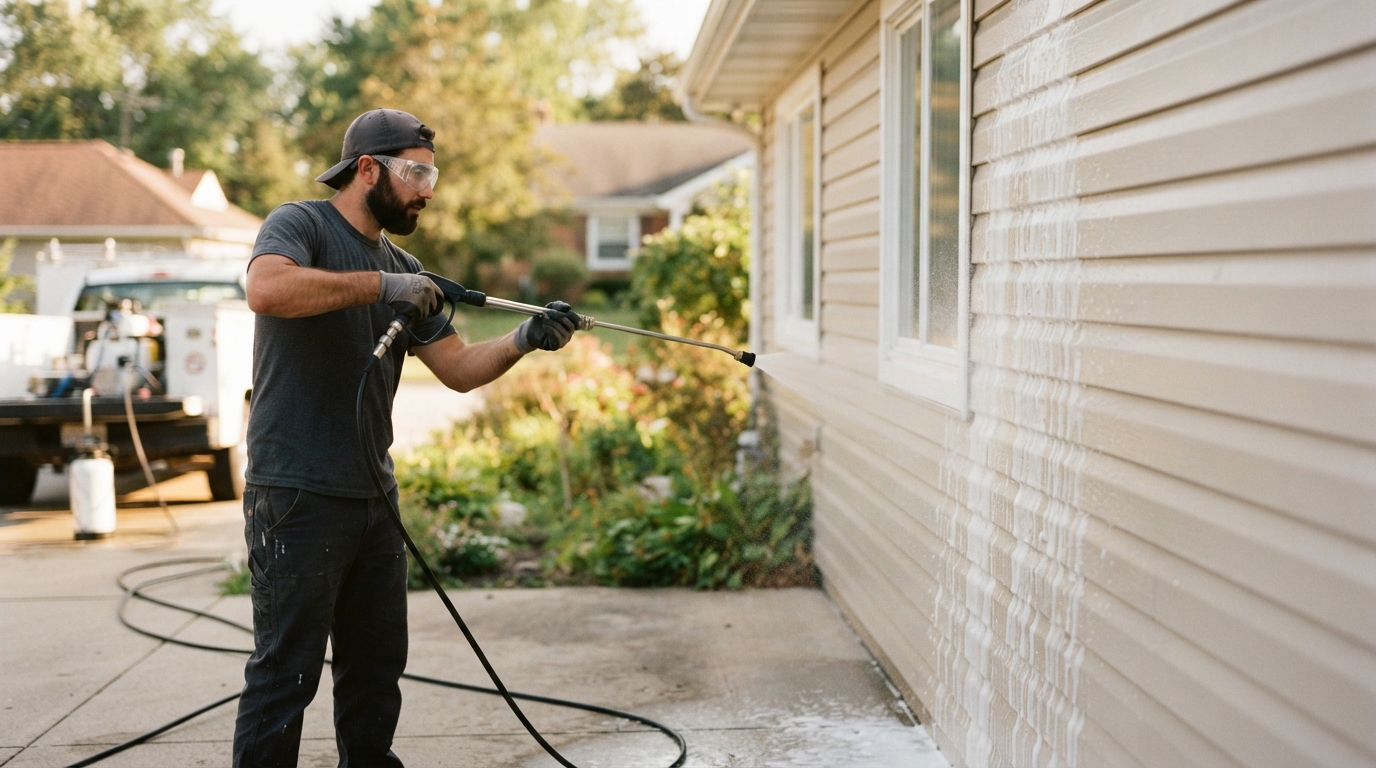
Soft wash pressure washing is a low-pressure exterior cleaning method that uses specialized detergents to break down algae, mildew, and dirt before rinsing, rather than relying on high water pressure to strip grime away. The approach protects delicate materials like vinyl siding, stucco, and asphalt shingles from the physical damage that higher-PSI cleaning can cause.
Understanding how this process works starts with the chemistry behind it. Soft wash pressure washing depends on a cleaning agent, typically a diluted bleach-based solution or a surfactant blend, that is applied at low pressure and allowed to sit on the surface before being rinsed away. This dwell time lets the chemical solution penetrate organic growth at the root rather than just knocking visible residue off the top.
How Soft Washing Differs From Pressure Washing
The core distinction between the two methods comes down to force versus chemistry.
- Pressure washing uses mechanical force, often several thousand PSI, to physically blast dirt and stains off hard surfaces like concrete or pavers.
- Soft washing uses water pressure typically under 300 PSI combined with a cleaning solution that does most of the work chemically.
- The most common pressure used in house washing is around 90-150 psi and should never exceed 300 psi.
- It is so named to differentiate the method from power washing.
| Method | Typical Pressure | Best Suited For |
| Soft Washing | Under 300 PSI | Siding, roofs, stucco, painted trim |
| Standard Pressure Washing | 1,500-4,000 PSI | Concrete, brick, pavers, driveways |
| Hybrid Approach | Varies by surface | Properties with mixed material types |
The Chemistry That Makes Soft Washing Effective
Soft wash solutions are built around a few core ingredients working together rather than water pressure alone.
1. Cleaning agent – commonly a sodium hypochlorite-based solution diluted to a safe working concentration.
2. Surfactant – helps the solution cling to vertical surfaces long enough to work instead of running off immediately.
3. Water – dilutes the mixture to a ratio appropriate for the surface being treated.
A typical soft washing solution contains three main components: a cleaning agent, a surfactant, and water. Soft wash mixes commonly rely on sodium hypochlorite, sodium hydroxide, algaecides or surfactants in water. Because these chemicals are regulated pesticide products when used for disinfecting or killing organic growth, applicators are expected to follow federal labeling rules, and the EPA’s pesticide registration guidance outlines labeling requirements specific to sodium hypochlorite products due to how quickly they degrade.
Why Surface Material Determines the Right Method
Not every exterior surface reacts the same way to cleaning chemicals or pressure.
- Asphalt shingles : The Asphalt Roofing Manufacturers Association recommends low-pressure bleach or detergent assisted washing as the preferred method for cleaning asphalt roofs in order to prevent damage to the shingles.
- Vinyl and painted siding : Prone to etching or streak marks if blasted with high-pressure equipment instead of treated chemically.
- Brick, stone, and concrete : Often tolerate higher pressure, though soft washing can still be used to avoid driving water behind mortar joints.
Humid, tree-covered neighborhoods in Cottondale, AL often see algae and mildew develop on north-facing walls and roof lines where sunlight exposure is limited. Regular soft washing addresses that organic buildup at a chemical level rather than just removing it temporarily from the surface.
Safety Considerations in the Soft Washing Process
Because soft washing involves pesticide-grade chemicals, proper handling matters as much as technique.
- Sodium hypochlorite is corrosive and should never be combined with ammonia or acids due to the risk of harmful gas release.
- Overspray can affect landscaping, so covering or pre-wetting plants is a standard precaution.
- Runoff should be managed to avoid concentrated chemical discharge into storm drains or soil.
The chemicals are corrosive and must never be mixed with ammonia or acids, so plants, pets and people need protecting during the job. These handling requirements are a primary reason many property owners rely on trained applicators rather than attempting the process with rented equipment.
Frequently Asked Questions
Does soft washing damage paint or siding? Soft washing is designed to avoid damage by relying on chemical action instead of high-pressure impact, though an inconspicuous test spot is generally recommended before full application on painted surfaces.
How often should a home be soft washed? Frequency depends on shade, humidity, and tree coverage, since these conditions accelerate algae and mildew regrowth on exterior surfaces.
Can soft washing be done without bleach-based chemicals? Alternative formulations exist, though sodium hypochlorite remains the most common active ingredient in professional soft wash solutions due to its effectiveness against organic growth.
Is soft washing safe for roofs? Low-pressure chemical cleaning is the method recommended by roofing material manufacturers specifically because it avoids granule loss associated with high-pressure rinsing.
Local Service Information
Based in the USA, Moody’s Pro Wash proudly serves customers throughout Cottondale, AL, providing professional exterior cleaning solutions. The company specializes in pressure washing and soft washing services, including gutter and roof cleaning.
To learn more about the soft washing process and how it can be applied to different exterior surfaces, explore the additional information available.