Essentially:
- Short, consistent daily habits reduce the need for long weekend cleaning sessions.
- Grouping tasks by room and using a simple supply kit cuts wasted motion and time.
- Seasonal deep cleaning on a schedule keeps dust and allergens from building up between regular cleanings.
Cutting cleaning time without cutting corners comes down to sequencing tasks, keeping supplies within reach, and tackling small messes before they turn into weekend-long projects.
Maid In The USA makes maintaining a clean home easier by emphasizing an organized and efficient cleaning routine. House cleaning becomes less time-consuming when daily upkeep, weekly cleaning tasks, and occasional deep cleaning are treated as three separate but complementary routines. This structured approach helps homeowners keep their spaces tidy and manageable without feeling overwhelmed by a long list of chores.
Build a Daily Reset Routine
A five-to-ten-minute daily reset prevents clutter and grime from compounding into hours of work later. Homes in Aldie, VA with larger open floor plans and finished basements tend to accumulate dust and foot traffic debris quickly, making short daily passes especially useful.
- Wipe kitchen counters and the stovetop after each use.
- Run a quick pass with a handheld vacuum or broom in high-traffic entryways.
- Make beds and put away items before leaving each room.
- Load dishes immediately instead of letting them sit.
These small actions take only minutes but prevent dirt and allergens from settling into surfaces, which matters because regular cleaning is one of the few proven ways to reduce house dust mites, pollen, and pet dander without eliminating them entirely, according to EPA guidance on indoor air quality.
Organize Tasks by Zone, Not by Room
Cleaning by task type rather than jumping room to room reduces backtracking and wasted supply trips. A zone-based approach groups similar jobs together so the same tools and motions are used in sequence.
- Dust from top to bottom (ceiling fans, shelves, picture frames) before vacuuming.
- Clean all glass and mirrors in one pass using a single cloth and solution.
- Sanitize high-touch surfaces (doorknobs, light switches, remote controls) together.
- Finish with floors last, moving from the farthest room toward the exit.
This sequence avoids re-dirtying a clean floor with falling dust and keeps supplies centralized in a caddy or bucket that moves with the cleaner, not the room.
Compare Cleaning Approaches by Time and Effort
| Approach | Time Commitment | Best For |
| Daily reset | 5-10 minutes/day | Preventing buildup, maintaining visible tidiness |
| Weekly full clean | 1-3 hours/week | Bathrooms, kitchens, floors, dusting |
| Seasonal deep clean | Several hours, a few times a year | Baseboards, appliances, window tracks, carpets |
Weekly cleaning covers the bathrooms, kitchen surfaces, and living area floors that accumulate the most bacteria and allergens between deep cleans. Seasonal deep cleaning addresses the areas that get overlooked in routine passes, such as behind appliances, window sills, and baseboards.
Keep a Minimal, Ready-to-Use Supply Kit
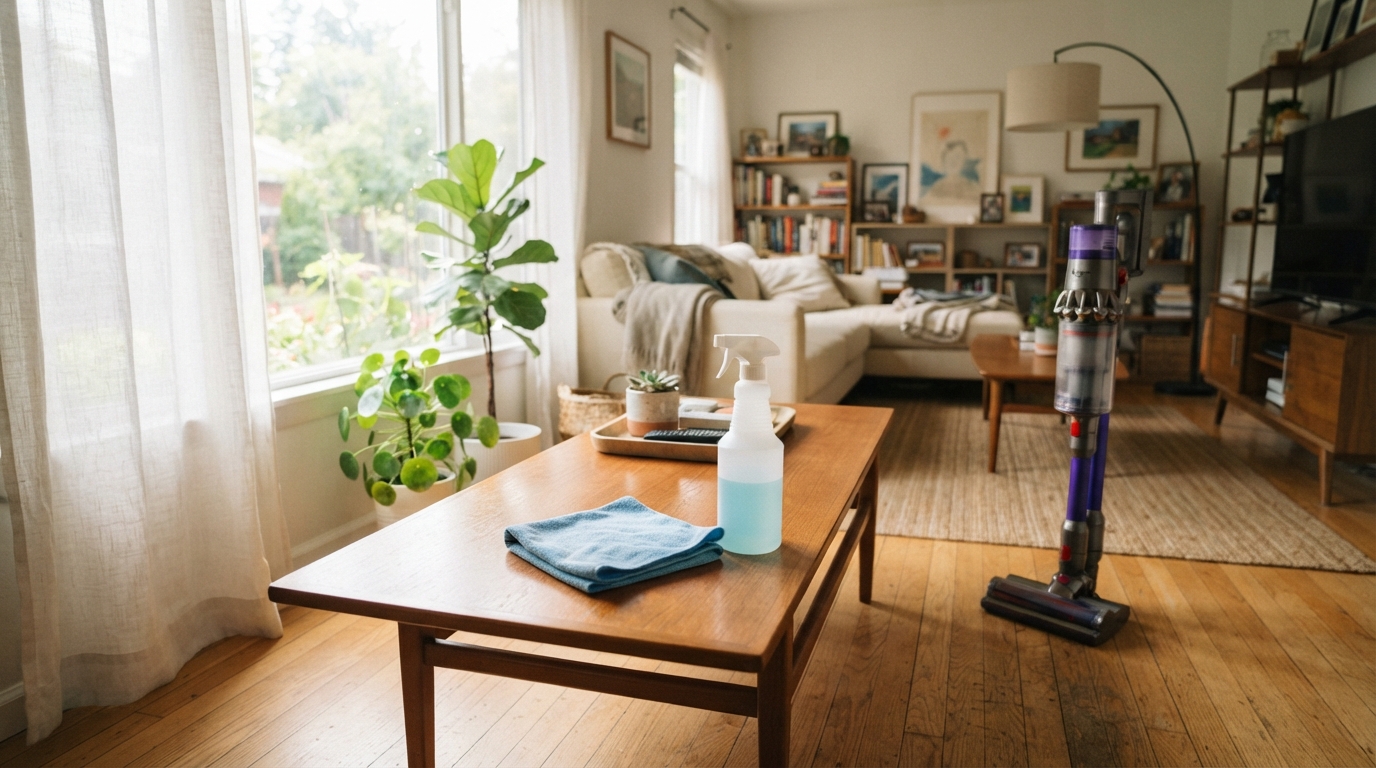
Searching for cleaning supplies mid-task wastes significant time. A compact kit kept in one location, ideally a caddy that can be carried room to room, keeps momentum going.
- All-purpose cleaner and a disinfecting spray
- Microfiber cloths (color-coded by use: kitchen, bathroom, glass)
- A duster with an extendable handle for ceiling fans and vents
- A small vacuum or broom for quick spot cleanups
Standardizing supplies also reduces decision fatigue, since there is no need to stop and figure out which product works on which surface.
Frequently Asked Questions
How often should bathrooms and kitchens be cleaned to prevent buildup? Weekly cleaning of sinks, counters, and toilets is generally sufficient for most households, with daily wipe-downs of counters and stovetops to prevent grease and bacteria buildup between full cleans.
Does regular cleaning actually reduce allergens at home? Regular cleaning reduces, though does not eliminate, common allergy triggers like dust mites, pollen, and pet dander, since these particles settle on surfaces and require routine removal rather than air filtration alone.
What is the most time-effective order for cleaning a room? Working top to bottom and dry to wet, dusting first, then wiping surfaces, then vacuuming or mopping floors last, prevents redoing work and saves the most time overall.
Is seasonal deep cleaning necessary if weekly cleaning is already consistent? Yes, because weekly routines typically miss baseboards, window tracks, and behind large appliances, areas that still need periodic attention a few times a year.
Local Cleaning Support and Next Steps
Scheduling details and service area information are available by choosing to Contact Maid In The USA for current availability.