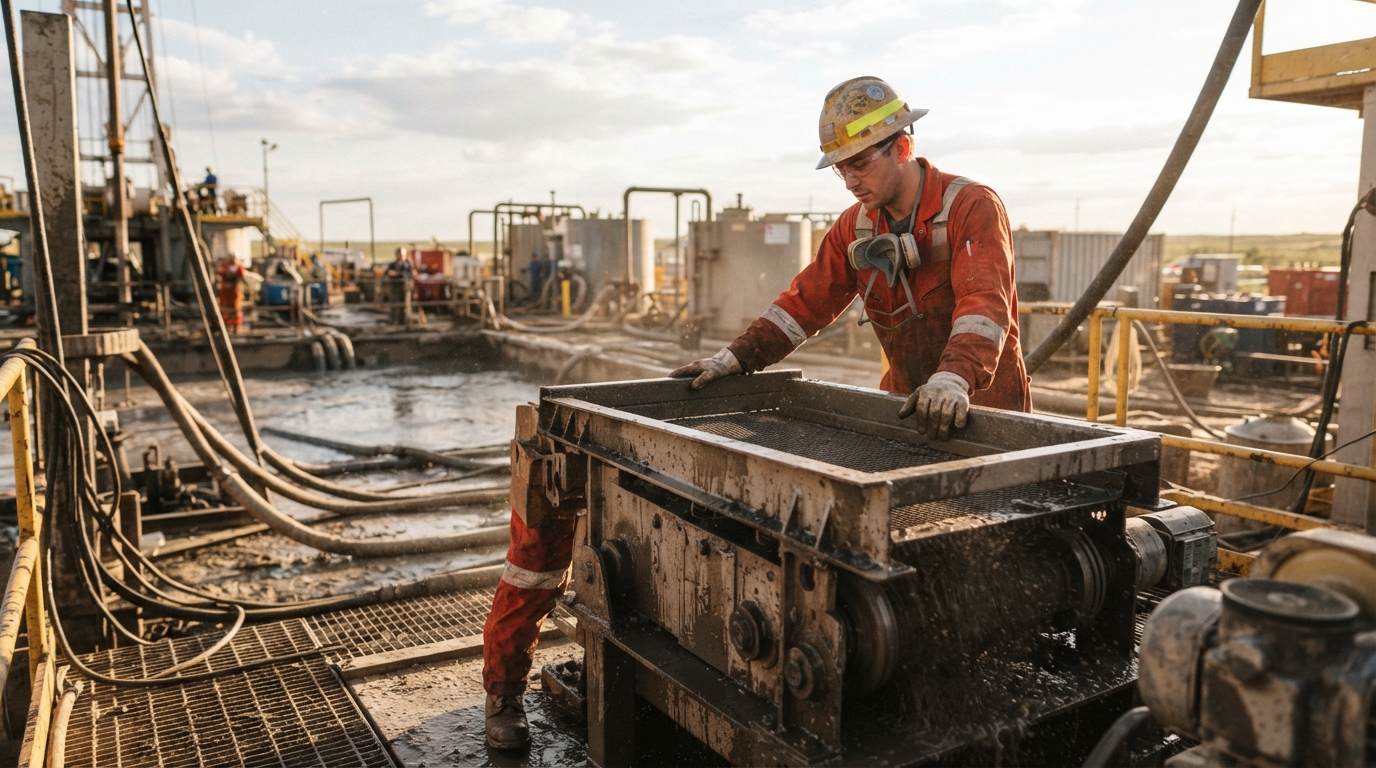
Key point:
- Solids control removes drill cuttings and fine particles from drilling fluid to protect equipment and maintain mud performance.
- Shale shakers, centrifuges, and dewatering units work together to separate solids while preserving usable fluid.
- Operators in Odessa, TX rely on these systems to manage waste volumes and meet discharge requirements on active rigs.
Solids control services remove drilled cuttings and unwanted particles from drilling fluid so that mud properties stay within the range a rig needs to drill safely and efficiently. Without this process, abrasive solids accumulate in the circulating system, wearing down pumps, bits, and downhole tools faster than expected.
Solids Control Services in Odessa, TX rely on a sequence of mechanical separation equipment rather than a single device. Shale shakers handle the first pass, screening out larger cuttings as fluid returns from the wellbore. Finer particles that pass through the shakers move to secondary equipment such as desanders, desilters, and centrifuges, which strip out progressively smaller solids before the fluid recirculates downhole.
How Solids Separation Protects the Drilling System
Drilling fluid picks up rock cuttings as it travels down the drill string and back up the annulus. If those particles are not removed efficiently, they thicken the mud, raise viscosity unpredictably, and reduce the fluid’s ability to carry additional cuttings.
- Shale shakers filter particles above roughly 75 microns using vibrating screens.
- Centrifuges spin fluid at high speed to separate out fine solids the shakers miss.
- Dewatering units reduce the liquid content of waste solids before disposal.
This staged approach keeps drilling fluid properties consistent across long runs, which matters on the multi-well pads common across the Permian Basin.
Equipment and Waste Management Considerations for Odessa, TX
Crews working in Odessa, TX deal with high-volume drilling programs where waste handling efficiency affects both cost and compliance. Federal rules set clear expectations for how drilling fluid and cuttings must be managed before discharge or disposal, and EPA effluent guidelines for oil and gas extraction outline the technology-based standards that solids control equipment is designed to meet. Dewatering and fines removal reduce the volume of waste requiring transport, which lowers trucking frequency and associated site traffic.
Field reporting is another piece of the process. Technicians track particle size distribution and fluid retention on cuttings to document that separation equipment is performing as expected throughout a job.
Comparing Core Solids Control Equipment
| Equipment | Primary Function | Typical Particle Range Removed |
| Shale shaker | First-stage screening of cuttings | Above 75 microns |
| Desander/Desilter | Removes mid-size sand and silt | 15 to 75 microns |
| Centrifuge | High-speed separation of fine solids | Below 15 microns |
| Dewatering unit | Reduces liquid content of waste solids | Varies by solids load |
Each stage builds on the one before it. Skipping a stage or running undersized equipment forces downstream units to work harder, which raises maintenance needs and can shorten screen or centrifuge life.
What happens if solids control equipment is undersized for a well? Undersized equipment allows more fine solids to remain in circulation, which increases fluid viscosity, raises pump wear, and can slow the rate of penetration.
How often does solids control equipment require maintenance checks? Maintenance intervals depend on drilling conditions and solids loading, but field technicians typically inspect screens, centrifuge components, and rig-up connections during routine site visits.
Does solids control reduce waste disposal volume? Yes. Dewatering and fines removal concentrate solids and reduce the liquid fraction, which lowers the overall volume that needs to be trucked offsite for disposal.
Is solids control only relevant for new wells? No. Workover and re-entry operations also generate cuttings and require fluid separation to maintain mud properties throughout the job.
Business Information and Next Steps
Based in USA, the company serves customers across Odessa, TX.
Readers evaluating equipment options or service availability can Visit Website for published location and contact details.