Summary:
- An interior plantscaping company designs, installs, and maintains live or artificial plant displays inside commercial buildings, often using sub-irrigation systems to reduce watering needs.
- Services typically include site consultation, plant selection based on light and layout, installation, and scheduled maintenance.
- Shades Of Green is based in Berkeley Heights, NJ and serves businesses across the Jersey City, NJ area.
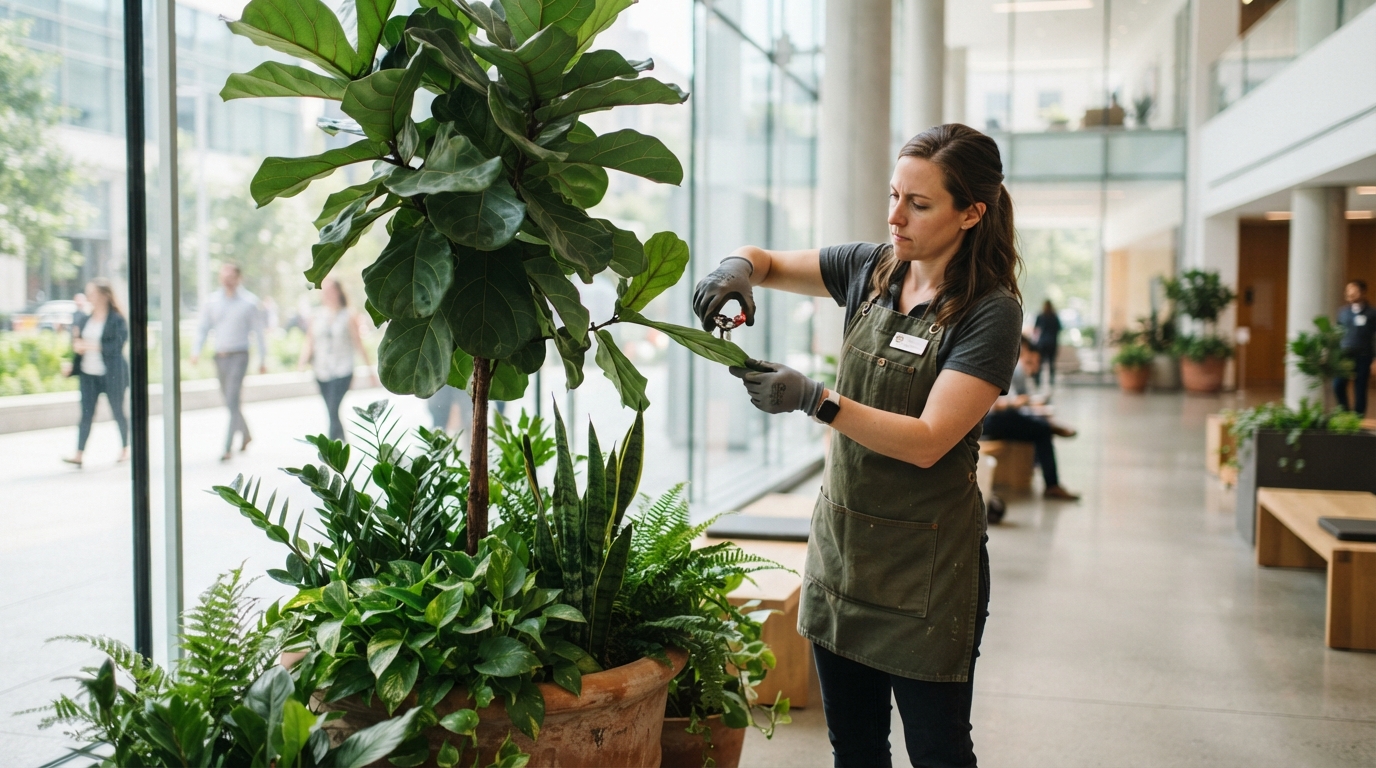
An interior plantscaping company handles the design, installation, and ongoing care of indoor plant displays for offices, lobbies, and other commercial spaces, matching plant selection to light levels, foot traffic, and maintenance needs. The goal is a durable, low-upkeep green environment rather than a one-time decorative purchase.
Finding a qualified Interior Plantscaping Company matters because plant health inside a building depends on factors most office managers do not track day to day, including light intensity, humidity swings, and HVAC airflow. A mismatched plant in a dim hallway or a drafty lobby corner often declines within weeks, which is why professional assessment before installation tends to outperform self-selected greenery purchased without a site visit.
What Interior Plantscaping Services Typically Include
Commercial plantscaping work generally follows a defined sequence rather than a single transaction. Established providers structure the process around these core steps:
1. Site consultation – evaluating lighting, foot traffic, available space, and existing decor before recommending plant types.
2. Plant selection and design – matching species and containers to the layout, including low-light specimens for interior offices and larger statement plants for lobbies.
3. Installation – placing plants and containers according to the finalized design plan.
4. Ongoing maintenance – scheduled visits for watering, pruning, fertilization, and pest monitoring.
Many providers also offer self-watering sub-irrigation systems, which reduce the staff burden of daily watering and help prevent the overwatering that commonly kills office plants.
Living Walls, Moss Walls, and Artificial Alternatives
Beyond individual potted displays, several plantscaping companies design vertical installations for lobbies and reception areas. These options differ in maintenance needs and suitability for different light conditions.
| Option | Maintenance Level | Best For |
| Live interior plants | Scheduled watering, pruning, pest checks | Offices with consistent natural or grow-light exposure |
| Living walls | Built-in irrigation, periodic servicing | Lobbies and feature walls with design impact |
| Preserved moss walls | No water or fertilizer required | Low-light interiors where live plants struggle |
| Artificial plants and silk greenery | Occasional dusting only | Spaces with minimal light or strict upkeep budgets |
Preserved moss walls require no ongoing irrigation, which makes them suited to interior spaces where live plants may not thrive. Living walls, by contrast, use built-in irrigation systems and function as a more active, water-dependent installation.
Evaluating Indoor Air Quality Claims
Office managers researching plantscaping often ask whether greenery measurably improves indoor air. The research record is mixed: the EPA’s review for health professionals notes that the only study of plants controlling pollutants in an actual building found no measurable benefit, and that plant removal mechanisms appear minor compared with proper ventilation and air exchange. This does not eliminate the value of interior plants, but it does mean air purification should not be the primary justification for an installation. Appearance, acoustic softening, and workplace atmosphere remain better-supported, practical reasons to invest in plantscaping.
For readers in Jersey City, NJ, where many commercial interiors rely on mechanical ventilation and limited natural light, plant selection should prioritize species tolerant of fluorescent or LED lighting and inconsistent humidity rather than species marketed primarily for air filtration. Based in Berkeley Heights, NJ, Click Here To Visit Shades Of Green serves commercial clients across Jersey City, NJ, applying site-specific lighting and layout assessments before recommending a plant palette.
Frequently Asked Questions
How often do commercial interior plants need professional maintenance? Maintenance frequency depends on plant density and building conditions, but most commercial accounts are serviced on a recurring schedule that includes watering checks, pruning, and pest monitoring rather than a single annual visit.
What is a sub-irrigation system? A sub-irrigation setup allows plants to draw water from a reservoir as needed, reducing the risk of overwatering and removing the need for staff to manage daily watering.
Are living walls harder to maintain than potted plants? Living walls include built-in irrigation and generally require periodic professional servicing rather than daily attention, though upkeep needs differ from standalone potted displays.
When do businesses choose artificial or moss walls over live plants? Spaces with very low natural light, inconsistent climate control, or strict no-water policies are common candidates for preserved moss walls or artificial greenery, since both avoid irrigation requirements entirely.
Business Information
Office managers comparing commercial plant service providers can review available offerings before making a decision, as plant selection and maintenance requirements vary depending on the company and building type. Click Here to Visit Shades of Green to explore interior plant design, installation, and maintenance services, including sub-irrigation systems and living wall solutions.