Key takeaway:
- A reliable kitchen cabinet supplier should offer material transparency, clear lead times, and verifiable local service history.
- Compare construction quality, finish options, and installation support before committing to a quote.
- Local sourcing in Orange County, CA affects delivery timelines, humidity-related material choices, and warranty handling.
Selecting a kitchen cabinet supplier means evaluating material quality, construction methods, lead times, and installation support before signing a contract. The right choice affects how long cabinets last, how well they handle daily use, and how smoothly a renovation project proceeds from order to installation.
Homeowners researching a Kitchen Cabinet Supplier often compare several vendors before settling on one, since cabinetry represents a significant share of any kitchen renovation budget. Pricing varies widely based on box construction, door style, and finish type, so understanding these variables early helps avoid mismatched expectations later in the project.
- What Separates a Reliable Supplier From the Rest
Not every supplier offers the same level of craftsmanship or accountability. A few practical markers tend to separate dependable vendors from inconsistent ones.
- Material transparency: Suppliers should clearly state whether cabinets use plywood boxes, particleboard, or MDF, since each material responds differently to moisture and weight.
- Finish documentation: Paint, stain, and laminate finishes should come with care instructions, since improper cleaning can shorten a finish’s lifespan.
- Lead time accuracy: Custom and semi-custom cabinets typically require longer production windows than stock lines, and a supplier should state realistic timeframes upfront.
- Installation coordination: Some suppliers handle installation directly, while others only supply the product, which changes the scope of responsibility if issues arise.
Construction Types and What They Mean for Durability
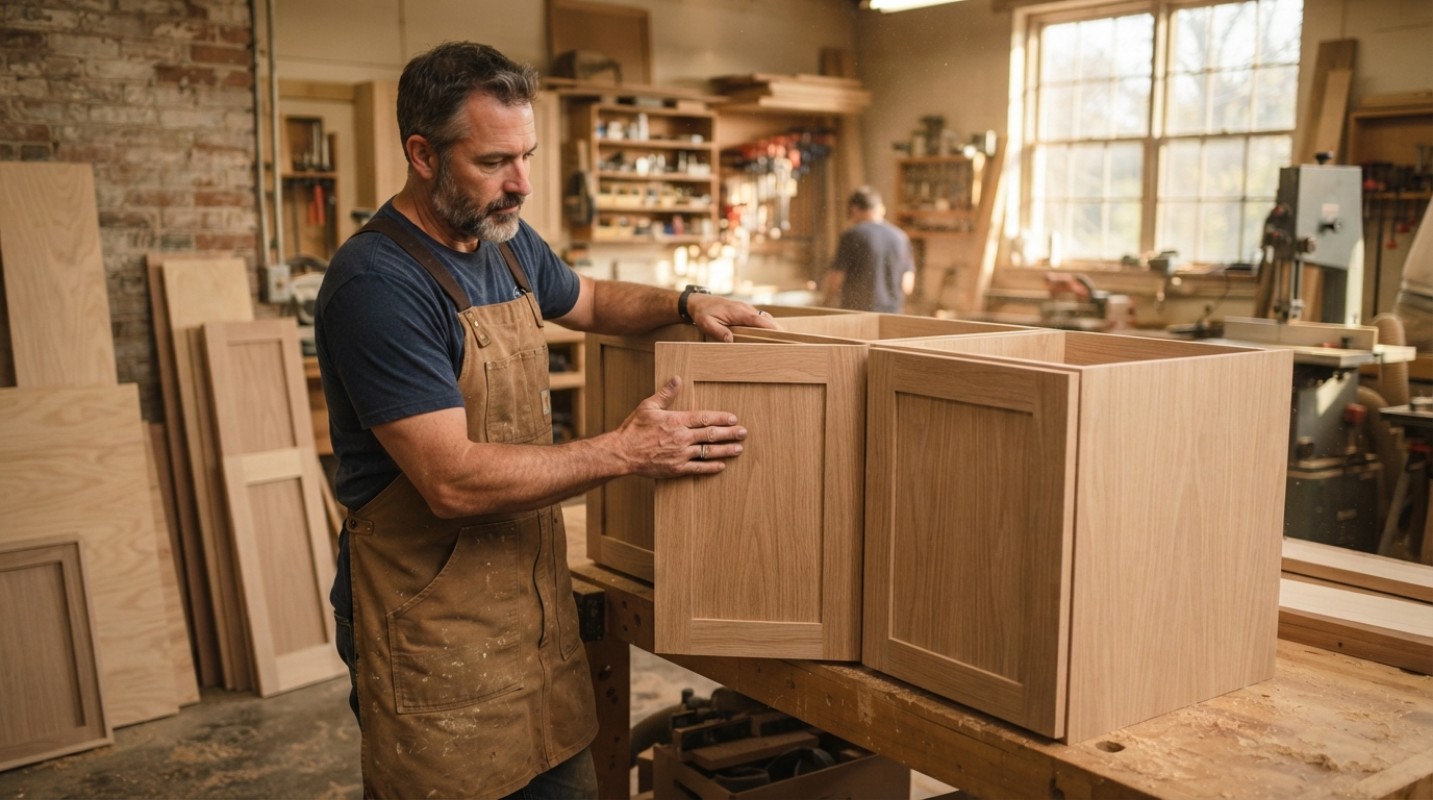
Cabinet construction methods directly influence how well boxes hold up under daily kitchen use, including moisture exposure, weight from dishes and cookware, and repeated opening and closing of doors and drawers. According to the U.S. Department of Energy, material choices in kitchen remodeling projects also affect long-term energy and maintenance considerations when cabinets are installed near appliances or exterior walls.
| Construction Type | Typical Material | Moisture Resistance | Common Use Case |
|---|---|---|---|
| Stock cabinets | Particleboard or MDF | Low to moderate | Budget-conscious remodels |
| Semi-custom cabinets | Plywood boxes, MDF doors | Moderate | Standard renovations with size flexibility |
| Full custom cabinets | Solid plywood, hardwood | High | Specific layouts or high-use kitchens |
Plywood boxes generally outperform particleboard in humid conditions because they resist swelling and delamination better over time. Full custom options cost more but allow precise sizing for irregular kitchen layouts, which is common in older Orange County, CA homes with non-standard dimensions.
- Evaluating Service Area and Local Sourcing
Supplier location affects delivery schedules, warranty support, and how quickly replacement parts or repairs can be handled if a cabinet is damaged during installation. Based in Chino, CA, Mayfair Cabinet and Stone serves customers across Orange County, CA, which places the business within reasonable delivery range of most coastal and inland neighborhoods in the region.
Homeowners should ask any prospective supplier about their actual service radius rather than assuming all vendors cover the same geographic area. A supplier based further away may still serve a region, but response times for warranty claims or adjustments can be slower compared to one with established routes into that area.
- Questions to Ask Before Signing a Contract
A short list of direct questions can reveal whether a supplier’s practices match their marketing claims.
- What warranty applies to cabinet boxes versus hardware like hinges and drawer slides?
- Are samples available to inspect finish color and wood grain before ordering?
- How are damaged or mismeasured units handled after delivery?
- Does the quoted price include installation, or is that billed separately?
Written answers to these questions, included in a contract or formal quote, protect both parties if disputes arise later.
- Frequently Asked Questions
How long does cabinet installation typically take? Installation timelines depend on kitchen size and whether cabinets are stock, semi-custom, or full custom, with custom orders generally requiring longer production and installation windows.
What is the difference between stock and semi-custom cabinets? Stock cabinets come in fixed sizes and finishes ready for quicker delivery, while semi-custom cabinets allow some adjustments to dimensions, finishes, and storage features.
Should cabinet quotes include installation costs? Not always. Some suppliers separate product cost from installation labor, so it is worth confirming whether a quote is for materials only or includes full installation service.
- Final Considerations
Reviewing construction materials, service area, and warranty terms before ordering cabinetry reduces the likelihood of delays or mismatched expectations during a kitchen renovation. Current service area details for Mayfair Cabinet and Stone are published online for homeowners comparing local options.