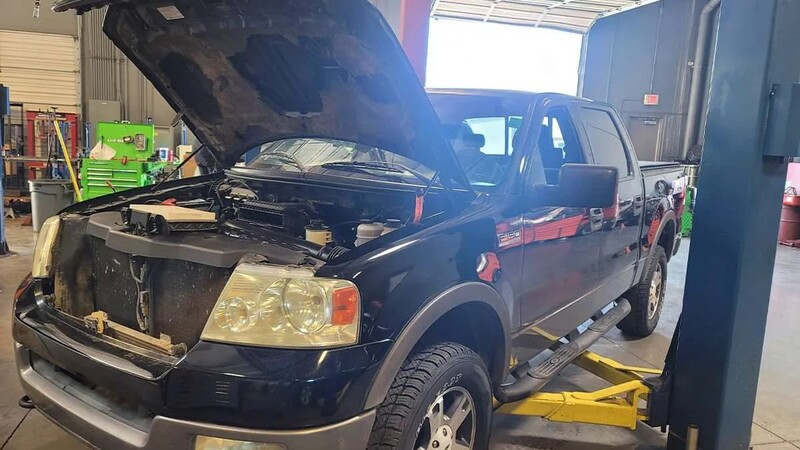
A diesel turbocharger uses energy from the engine’s exhaust to force more air into the cylinders, which lets the engine burn fuel more completely and produce more power. Many modern diesel pickups and work trucks use an advanced design called a variable geometry turbocharger, and keeping it working properly takes specialized tools and diesel training.
For drivers in Surprise, AZ, the turbocharger does a lot of work. Diesel trucks here tow trailers and RVs, haul equipment, and cover long highway stretches in triple-digit heat. Understanding how the turbo manages boost helps explain why its care belongs with a diesel mechanic shop.
What Does a Turbocharger Do on a Diesel Engine?
A turbocharger has two main sections connected by a shared shaft:
- The turbine side sits in the exhaust stream. Hot exhaust gas spins the turbine wheel.
- The compressor side sits in the intake. As the shaft turns, the compressor wheel draws in outside air and pressurizes it.
That pressurized air is called boost. More air in the cylinders allows more fuel to burn efficiently, which is why turbocharged diesels can produce strong torque from a relatively compact engine.
The shaft connecting the two wheels spins at extremely high speeds, often well over 100,000 revolutions per minute. It relies on a steady supply of clean engine oil for lubrication and cooling.
How Is Boost Controlled?
An engine doesn’t need the same amount of boost all the time. Too little and it feels sluggish under load; too much and it can stress internal components. The engine’s computer manages boost constantly, using data from pressure sensors, temperature sensors and engine speed.
Older turbo designs often used a wastegate, a valve that lets some exhaust bypass the turbine when boost gets high enough. Many modern diesels use a more precise approach.
What Is a Variable Geometry Turbocharger?
A variable geometry turbocharger (VGT) has a ring of adjustable vanes around the turbine wheel. By changing the angle of those vanes, the engine computer controls how fast exhaust gas hits the turbine:
- At low engine speeds, the vanes narrow the passage, which speeds up the exhaust flow so the turbo builds boost sooner.
- At higher engine speeds, the vanes open to let exhaust flow more freely and keep boost within limits.
An electronic actuator moves the vanes based on commands from the engine computer. On some diesel trucks, the same vane system also helps with exhaust braking, which adds engine-based slowing on long downgrades.
This design gives a single turbocharger the responsiveness of a small turbo at low speed and the airflow of a larger one at high speed. It also adds moving parts and electronics that work inside hot, soot-carrying exhaust.
Why Does Arizona Driving Put Extra Demand on Diesel Turbos?
Turbochargers already operate in one of the hottest areas of the engine. Driving around Surprise adds more heat and load:
- High outside temperatures reduce the cooling margin for oil, intake air and engine components.
- Towing and hauling keep the turbo working at higher boost for longer periods.
- Long highway trips, such as climbs toward northern Arizona, combine sustained load with elevation changes the engine computer has to account for.
These conditions are a normal part of diesel ownership in the West Valley, which is why professional diesel engine service schedules take driving conditions into account.
Why Does Turbo Service Require Diesel Specialists?
A turbocharger doesn’t work in isolation. Its performance depends on the oil supply, intake and charge-air plumbing, exhaust system, sensors and engine software all working together. That’s why turbo work is handled by trained Diesel Specialists rather than treated as a simple part swap.
Professional automotive diesel repair on a turbo system typically involves:
- Diagnostic scan tools that compare the boost the engine computer requests with the boost the turbo actually delivers, and command the vane actuator to check its movement
- Inspection of the full air path, including intake ducting, the intercooler and connections where pressurized air travels
- Oil supply and drain checks, since lubrication is essential to a turbo running at such high shaft speeds
- Actuator calibration or relearn procedures after certain repairs, so the engine computer and vanes stay in sync
- Manufacturer specifications and torque values for mounting, oil lines and exhaust connections
Because the turbo connects to the emissions system, exhaust components and engine controls, trained diesel auto mechanics look at how the whole system works together.
When Should a Diesel Owner Have the Turbo System Looked At?
A change in power, unusual noises from the engine bay, a warning light, or a change in exhaust should be inspected by a professional rather than left to guesswork. Routine diesel service intervals are also a good time for a technician to review the turbo system along with the rest of the engine.
Diesel owners in Surprise who tow, haul or drive long distances in summer heat benefit from having their turbocharger evaluated as part of regular professional care. A diesel mechanic shop with the right diagnostic equipment can confirm the system is delivering boost the way the manufacturer designed it.
Keeping Diesel Turbos Working in Surprise, AZ
Variable geometry turbochargers are a big part of what makes modern diesel trucks capable and efficient. They’re also precise systems that rely on electronics, lubrication and calibration. For drivers in Surprise, AZ, scheduling turbo inspections and service with trained diesel technicians is the most dependable way to keep that system performing through heat, heavy loads and long miles.