Takeaway:
- Poor placement, the wrong fixture type, and ignoring motion-sensor range are the most common security lighting mistakes on Tampa properties.
- Proper planning around entry points, driveways, and dark corners reduces blind spots and false triggers.
- Working with a licensed electrician helps ensure wiring, timers, and fixture ratings meet Florida’s humidity and storm conditions.
Security lighting works best when it eliminates shadows around entry points without creating glare that blinds cameras or neighbors. Property owners who skip planning often end up with coverage gaps, flickering motion sensors, or fixtures that fail within a year because of Tampa’s heat and moisture.
Getting Security Lighting Installation in Tampa, FL right from the start means fewer callbacks, lower energy costs, and a system that actually deters intruders instead of just adding another bill. Many of the mistakes below are avoidable with basic planning before you start wiring.
Placement Errors That Create Blind Spots
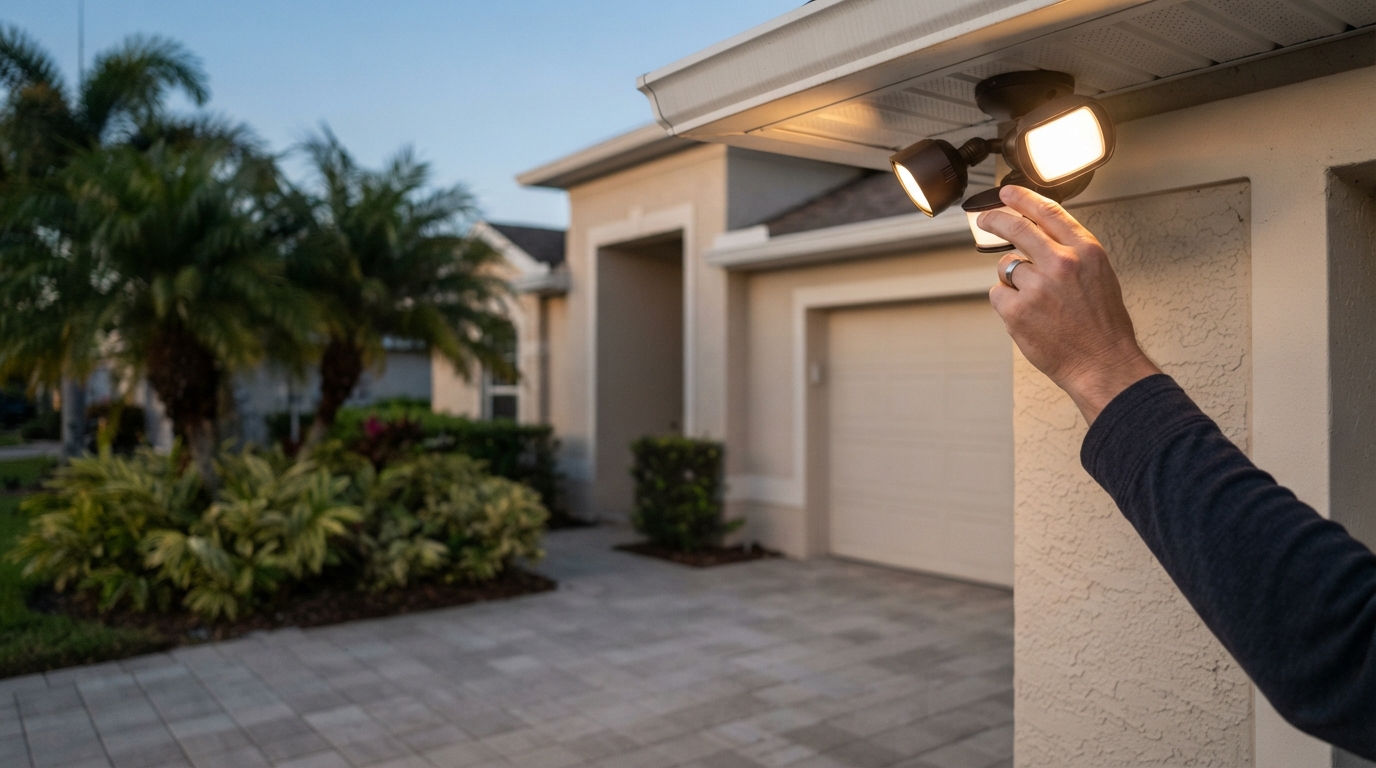
The most common mistake is mounting fixtures too high or too far from the area they are meant to protect. Light scatters and weakens with distance, so fixtures placed for maximum spread often leave the ground level dim, exactly where visibility matters most.
Typical placement issues include:
- Lights aimed only at the front door while side gates and backyards stay dark
- Fixtures mounted under deep eaves that block the beam path
- Single floodlights expected to cover an entire driveway or yard
A layered approach, using multiple lower-wattage fixtures instead of one powerful floodlight, tends to produce more even coverage and fewer dark corners.
Choosing the Wrong Fixture Type for the Climate
Tampa’s humidity, proximity to salt air, and frequent summer storms put outdoor electrical fixtures under more stress than in drier climates. Fixtures without a proper weatherproof rating corrode or short out faster, leading to repeat repairs.
The National Institute of Standards and Technology notes that outdoor lighting equipment exposed to moisture and temperature swings requires enclosures rated for the environment to maintain reliable performance over time. Choosing fixtures with appropriate ingress protection ratings for coastal humidity, rather than generic indoor-rated hardware, reduces premature failure.
Motion Sensor Misconfiguration
Motion sensors are meant to save energy and highlight actual movement, but incorrect settings often create more problems than they solve. Sensitivity set too high triggers constant false alarms from passing cars, pets, or wind-blown branches.
Common sensor mistakes include:
- Range set wider than the property line, lighting up neighboring yards or streets
- Sensors aimed where tree branches or sprinklers trigger them nightly
- No distinction between dusk-to-dawn ambient lighting and motion-triggered security lighting
Testing sensor angles and sensitivity over a few nights before finalizing placement helps catch these issues early.
Wiring and Timer Oversights
Security lighting is only as reliable as the wiring and controls behind it. Exposed or improperly buried wiring is vulnerable to damage from lawn equipment, moisture intrusion, and code violations.
| Oversight | Risk | Better Approach |
| Surface-run wiring | Damage from mowers, weather exposure | Bury wiring per local code depth requirements |
| No timer or photocell | Lights run during daylight, wasted energy | Install photocell or smart timer control |
| Single circuit for all fixtures | Entire system fails if one point shorts | Separate circuits for critical zones |
| Mismatched voltage fixtures | Uneven brightness, premature bulb failure | Match fixture specs to circuit design |
Permitting and inspection requirements also vary by jurisdiction, and unpermitted electrical work can create issues during a home sale or insurance claim.
Frequently Asked Questions
What is the biggest mistake property owners make with security lighting? Relying too much on a single bright floodlight instead of distributing several fixtures to evenly cover entry points, pathways, and dark corners.
How many security lights does a typical property need? This depends on lot size, number of entry points, and existing landscaping, which is why a site walk-through before installation is generally recommended over guessing fixture counts.
Do motion sensor lights need professional installation? Basic plug-in units can be DIY, but hardwired systems involving new circuits, timers, or integration with existing electrical panels typically require a licensed electrician to meet code.
Can existing outdoor outlets power new security lighting? Sometimes, but older outlets may not be rated for the added load or may lack proper weatherproof covers, so an electrical assessment is a practical first step.
Planning the Next Step
Mr. Electric of Tampa Bay provides licensed electrical services for Tampa-area homes and businesses, with a focus on code compliance and reliable outdoor wiring solutions. Property owners weighing fixture types, sensor placement, or wiring upgrades can benefit from a professional assessment before committing to a layout. Those ready to move forward can Click Here to learn more about scheduling a consultation and reviewing options suited to a property’s specific layout and risk areas.