Bottom line:
- Low ice output, cloudy ice, and leaks usually trace back to dirty condensers, scale buildup, or water filtration problems.
- Routine maintenance (filter changes, coil cleaning, sanitizing) prevents most breakdowns in Pensacola’s humid, high-use kitchens.
- Professional diagnosis is recommended for refrigerant, electrical, or persistent leak issues rather than DIY fixes.
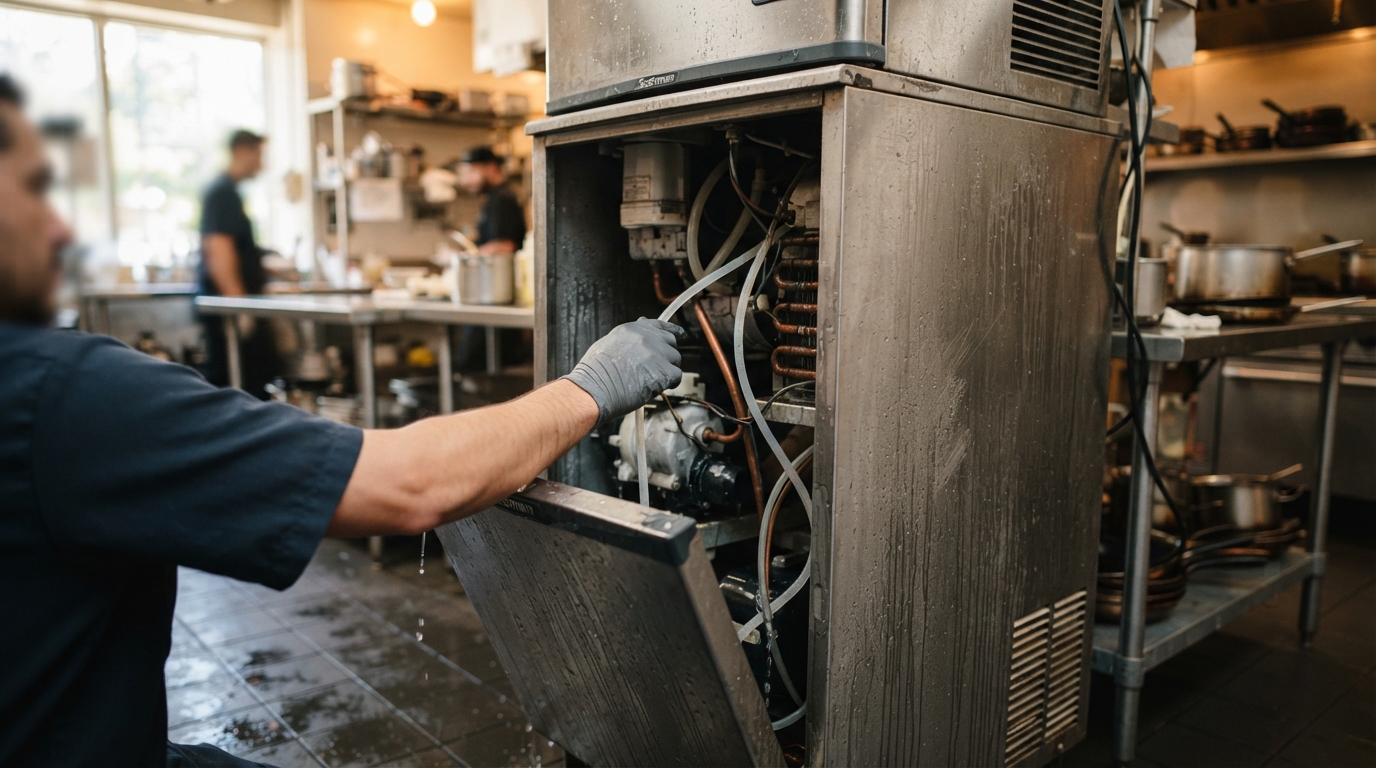
A commercial ice machine that is producing less ice, running loudly, or leaking water is almost always signaling a specific, identifiable problem rather than total failure. Most issues fall into a short list of causes: dirty condensers, scale buildup, clogged filtration, or worn electrical components, and each has a defined repair path.
For restaurants, bars, and medical facilities across the Gulf Coast, Ice Machine Repair In Pensacola addresses these failures before they shut down service or compromise food safety. Humidity and heat in this region accelerate condenser strain and mineral buildup, making preventive care especially important for local kitchens.
Why Ice Machines Fail in Pensacola’s Climate
Coastal humidity and salt air put extra stress on refrigeration components that handle both cooling and water filtration. Warm ambient air forces condensers to work harder, while mineral content in municipal water accelerates scale formation inside evaporator plates and water lines.
Three factors compound these problems locally:
- High kitchen traffic during tourist season increases machine run-time and wear
- Humid air reduces condenser efficiency, especially on air-cooled units
- Water hardness varies by neighborhood, affecting scale accumulation rates
Dirty condensers alone can reduce ice production by a significant margin before the unit shows other symptoms, since the system struggles to maintain proper refrigerant temperatures as debris builds up on the coils, according to a commercial ice machine maintenance guide.
Common Ice Machine Problems and What Causes Them
Most service calls fall into a handful of recurring categories. Recognizing the symptom early often limits the repair to a single component rather than a full system failure.
1. Low or no ice production – Usually caused by dirty condenser coils, low refrigerant, or a failing water inlet valve.
2. Cloudy or odd-tasting ice – Typically linked to scale buildup, an overdue water filter, or inadequate sanitizing.
3. Water leaking from the unit – Often traced to a cracked water line, clogged drain, or failed float valve.
4. Unusual noise or vibration – Can point to a failing compressor, loose fan blade, or worn bearings.
5. Slow ice melt or soft cubes – Frequently related to bin thermostat miscalibration or inadequate insulation.
Ice is classified as a food product, so contamination from biofilm, mold, or bacteria is a food safety issue, not just a mechanical inconvenience, as outlined in guidance on ice machine sanitation and FDA food classification. This is why diagnosing the root cause, rather than simply clearing a clog, matters for commercial kitchens.
DIY Checks vs. Professional Repair
Some symptoms can be checked by kitchen staff before calling a technician, while others require licensed service to avoid voiding warranties or worsening the problem.
| Symptom | Staff-Level Check | When to Call a Technician |
| Low ice output | Confirm water supply and clean exterior vents | Condenser cleaning, refrigerant check, valve replacement |
| Cloudy ice | Check filter replacement date | Scale removal, internal descaling, water line inspection |
| Leaking water | Check drain line for visible clogs | Float valve repair, line replacement, seal repair |
| Loud noise or vibration | Confirm machine is level and unobstructed | Compressor inspection, fan or bearing replacement |
Routine upkeep remains the most reliable way to avoid emergency downtime. Replacing water filters every six months, cleaning condenser coils monthly, and sanitizing ice-contact surfaces on a set schedule are the three habits that matter most for keeping a machine running efficiently, according to an ice machine maintenance checklist guide. Facilities in high-risk categories, such as healthcare settings or bakeries, may need cleaning as often as every one to two weeks rather than the standard quarterly interval.
Keeping Commercial Kitchens Running
Restaurants, grocery stores, and medical facilities depend on consistent ice production to meet health code requirements and daily service demands. A single machine failure during peak hours can affect both customer experience and compliance records, making a documented maintenance routine and a responsive repair plan equally important.
Technicians familiar with Pensacola’s water conditions and climate can often identify recurring failure patterns, such as accelerated scale buildup or condenser strain, faster than a general appliance repair service. Scheduling routine inspections alongside repairs helps commercial kitchens avoid the most disruptive breakdowns, particularly during high-traffic seasons along the Gulf Coast.
Frequently Asked Questions
How often should a commercial ice machine be professionally serviced? Most manufacturers recommend a deep cleaning and inspection every three to six months, though high-traffic kitchens or coastal environments may need more frequent service.
What is the most common reason ice machines lose production? Dirty condenser coils are among the most frequent causes, since debris buildup forces the system to work harder and reduces cooling efficiency.
Can cloudy ice indicate a health risk? Yes. Cloudy or off-tasting ice often signals scale buildup or inadequate sanitizing, both of which can contribute to bacterial growth if left unaddressed.
Is it normal for an ice machine to need repairs more often in humid climates? Humidity and heat increase strain on condensers and refrigeration components, which can shorten intervals between needed repairs compared to drier climates.
Pensacola’s commercial kitchens, medical facilities, and retail businesses rely on steady ice production to stay compliant and operational, especially during the region’s busiest and most humid months. Addressing early warning signs, such as reduced output or cloudy ice, before they become full system failures helps avoid costly downtime. Miller Heating & Cooling LLC provides commercial ice machine repair and installation service across the Pensacola area for businesses that need dependable, timely attention to this equipment.