Key point:
- Septic tank system repair addresses failing baffles, cracked lids, root intrusion, and drain field saturation before they cause sewage backups.
- Routine inspection and pumping reduce the likelihood of needing emergency repairs later.
- Homeowners in Lawrenceville, GA should watch for slow drains, soggy yard patches, and sewage odors as early warning signs.
Septic tank system repair refers to the diagnosis and correction of problems within a septic tank or its connected drain field, including cracked tanks, failed baffles, clogged pipes, and saturated soil absorption areas. A system in need of repair typically shows warning signs such as slow drains, gurgling pipes, standing water near the tank, or sewage odors in the yard.
Septic systems are underground and often overlooked until a problem surfaces. Georgia’s clay-heavy soils and seasonal rainfall can accelerate wear on drain fields, making early detection of Septic Tank System Repair needs especially relevant for homes in Lawrenceville, GA. Catching a small issue, such as a cracked baffle or a partially blocked distribution line, before it worsens can prevent a far more disruptive and costly system failure.
Common Signs a Septic System Needs Repair
Septic problems rarely appear without warning. Recognizing these signals early allows homeowners to schedule service before a minor issue becomes a full system failure.
- Slow-draining sinks, tubs, or toilets throughout the house
- Gurgling sounds in plumbing fixtures
- Standing water or unusually lush, green grass over the drain field
- Sewage odors near the tank lid or in the yard
- Sewage backing up into drains or toilets
Any one of these symptoms can indicate a baffle failure, a clogged effluent filter, a cracked tank, or a saturated drain field. According to the EPA’s guidance on septic systems, regular maintenance is the best method to prevent a septic system failure, and maintenance includes inspecting the entire system every one to three years and pumping the tank every three to five years.
What Septic Tank Repair Typically Involves
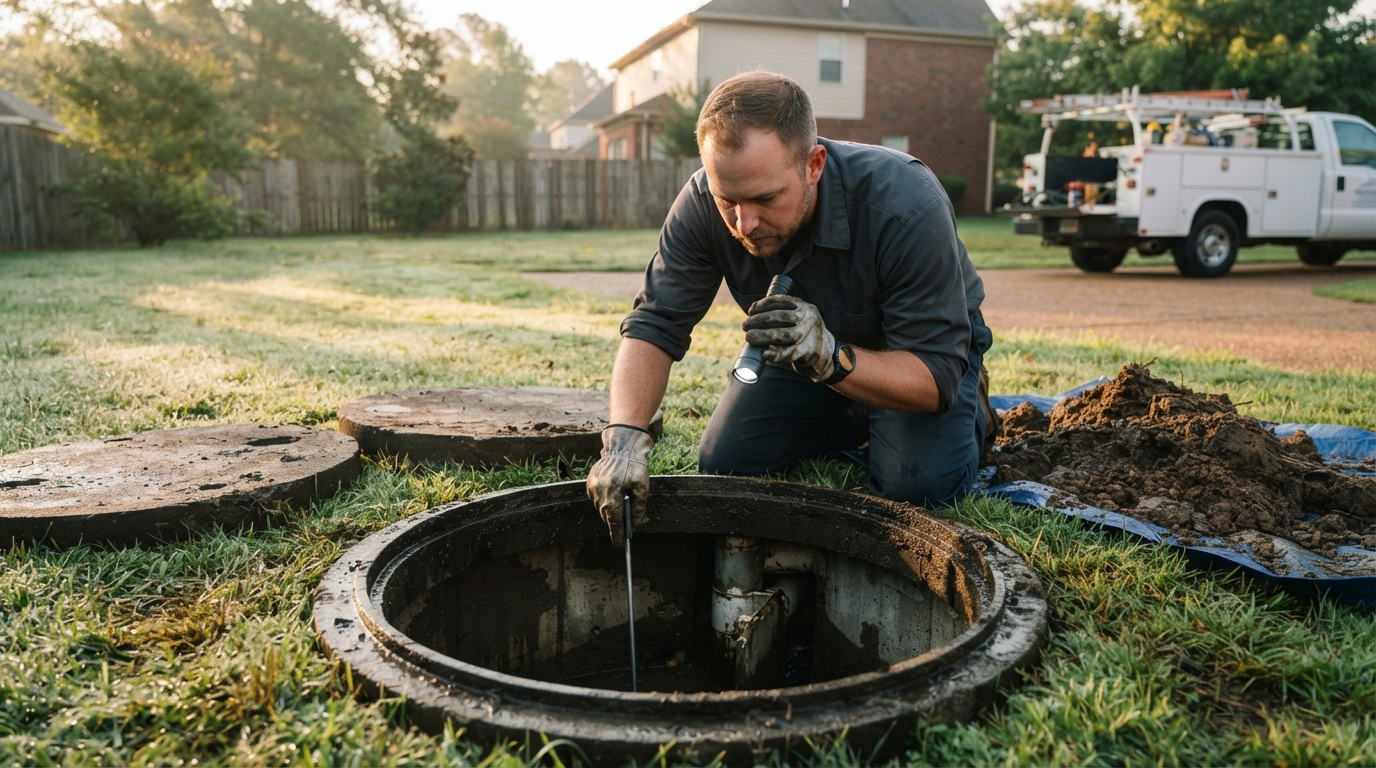
Repair work depends on which part of the system has failed. A professional evaluation usually starts with a visual and mechanical inspection of the tank, baffles, and distribution box before any repair begins.
- Tank component repair – replacing broken baffles, sealing cracks, or repairing risers and lids.
- Line and filter service – clearing blocked inlet or outlet pipes and cleaning or replacing effluent filters.
- Drain field correction – addressing compacted or saturated soil absorption areas that prevent proper wastewater dispersal.
- Pump and lift station repair – servicing mechanical components in systems that rely on pumps rather than gravity flow.
| Repair Type | Typical Cause | Urgency Level |
|---|---|---|
| Baffle or lid repair | Age, corrosion, physical damage | Moderate |
| Clogged effluent filter | Infrequent cleaning, heavy solids | Low to moderate |
| Drain field saturation | Excess water use, poor soil percolation | High |
| Pump or float switch failure | Mechanical wear, electrical issues | High |
Preventing Repeat Repairs Through Maintenance
Consistent maintenance reduces how often a septic system needs corrective repair. A few habits make a measurable difference over the life of a system.
- Schedule inspections on a regular interval rather than waiting for visible problems.
- Avoid flushing wipes, grease, or chemicals that disrupt the tank’s bacterial balance.
- Keep heavy vehicles and structures off the drain field area.
- Space out laundry and heavy water use to avoid overloading the system in a short period.
The Penn State Extension septic tank pumping guide notes that septic systems should be inspected annually and tanks pumped every three to five years, or when an inspection indicates the tank is more than one-third full of solids, with the EPA recommending inspection every one to three years and pumping every three to five years. Following this type of schedule lowers the odds of an unexpected repair call.
Frequently Asked Questions
How do I know if my septic tank needs repair instead of just pumping? Slow drains after a recent pump-out, visible cracks around the lid, or standing water over the drain field usually point to a repair need rather than routine maintenance.
Can a damaged drain field be repaired, or does it need full replacement? Some drain field issues, such as a single blocked line, can be repaired. Widespread saturation or soil compaction across the field often requires replacement rather than a localized fix.
How long does a typical septic tank repair take? Minor repairs, such as baffle or filter replacement, are often completed in a single visit. Drain field corrections can take longer depending on soil conditions and the extent of the damage.
Does homeowners insurance cover septic repair costs? Coverage varies by policy and cause of failure. Reviewing the specific policy language or consulting the insurance provider directly is the most reliable way to confirm coverage.
Local Service Information
Additional information about septic tank system cleaning practices and scheduling is available through Learn More About Affordable Septic Service LLC, which outlines routine maintenance options for area homeowners.