Short answer:
- Door screen styles include hinged, sliding, and retractable, with material choices such as fiberglass, aluminum, vinyl, metal, and wood.
- Fiberglass suits most budgets, aluminum and stainless steel add strength, and solar mesh reduces glare and heat in sunny climates.
- Measuring the door opening accurately and matching mesh type to local pests and sun exposure are the two decisions that matter most.
Choosing a screen door comes down to matching frame style and mesh material to how a door gets used every day. A hinged screen suits a front entry that opens and closes often, while a sliding or retractable screen works better alongside a patio or sliding glass door. Homeowners considering Door Screens in West Hollywood, CA often want a style that fits their existing door frame and durable mesh materials that can withstand intense sunlight, pet activity, and frequent daily use. Choosing the right screen improves ventilation, keeps insects out, and maintains long-term functionality.
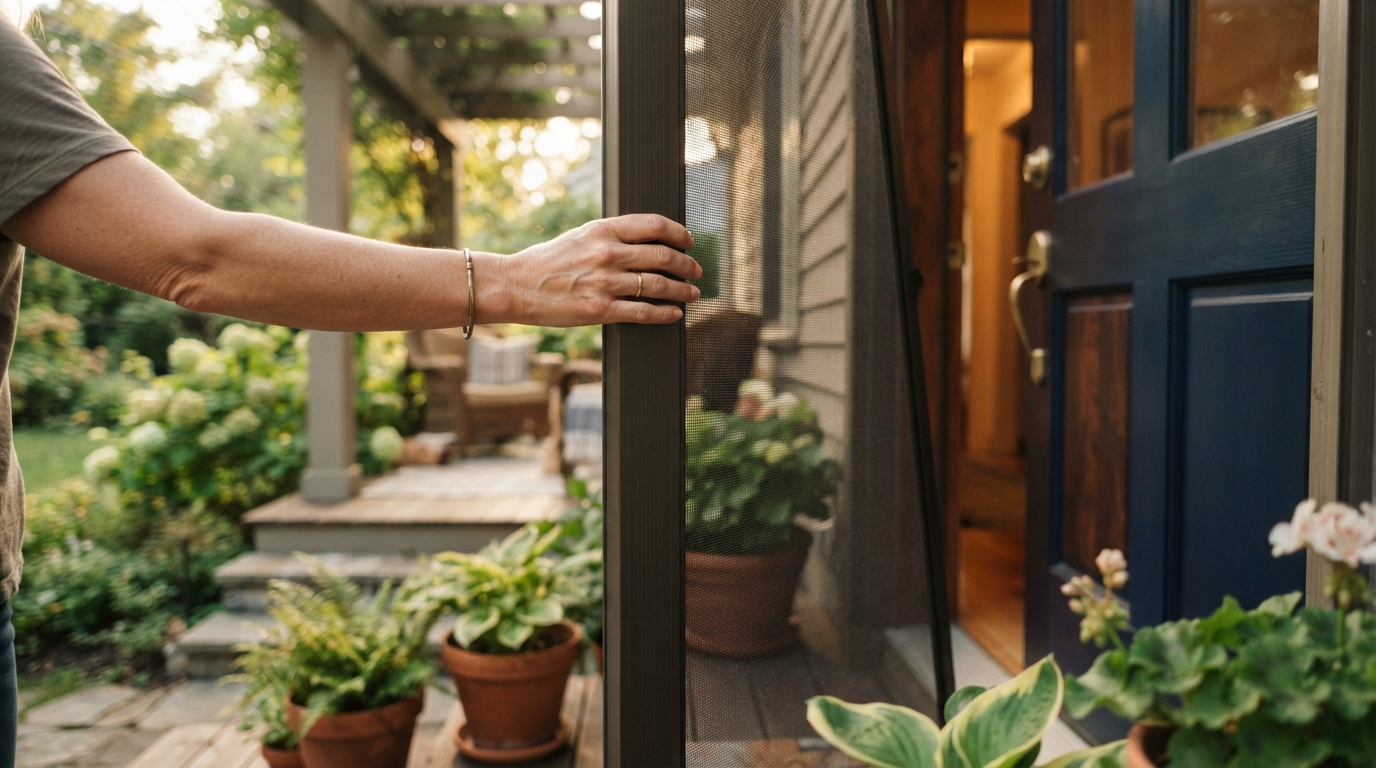
Door screens serve a simple but important function: they let air and light into a home while keeping insects, debris, and small pests outside. A screen door incorporates mesh material to block flying insects and airborne debris while still allowing air, light, and views through the opening, according to Wikipedia’s overview of screen door construction. That basic function has not changed much over the decades, but the materials and mounting styles available today offer far more flexibility than older aluminum-frame designs.
Screen Door Styles and How They Operate
Three door styles cover most residential needs:
- Hinged screens swing open like a standard storm door and work well for front or back entries with regular foot traffic.
- Sliding screens pair with sliding glass doors and move along a track, making them common on patios.
- Retractable screens roll into a housing when not in use, which keeps the doorway clear for an unobstructed view or wider passage.
Each style accepts different mesh and frame materials, so the choice of door style often comes before the choice of mesh.
Matching Mesh Material to Climate and Use
Mesh material affects durability, visibility, and how much heat and glare pass through a screen. Fiberglass mesh remains the most common and economical option for residential doors, while aluminum mesh costs more but resists dents and wear better over time. Homes in sunny climates, including West Hollywood, CA, often benefit from solar screen mesh, which is designed to block UV rays and reduce indoor heat and glare.
| Material | Best For | Maintenance Level |
|---|---|---|
| Fiberglass | General residential use, budget-friendly | Low, occasional cleaning |
| Aluminum/Metal | High-traffic doors, added strength | Low to moderate |
| Stainless Steel | Security-focused screens | Low |
| Solar Mesh | Sunny exposures, glare and heat reduction | Low |
Vinyl, wood, and fiberglass frame options are also available depending on whether the priority is cost, appearance, or weather resistance.
Sizing, Fit, and Common Maintenance Issues
An accurate measurement of the door opening prevents gaps that let insects through or cause the screen to bind in its track. Screen doors are available in a range of sizes to fit different frame widths and heights, so taking precise measurements before ordering avoids a mismatched fit. Over time, mesh can sag, tear, or pull away from the frame, particularly on sliding or retractable units exposed to repeated use.
- Inspect mesh seasonally for small tears before they widen.
- Clean tracks and hinges to keep sliding or retractable screens moving smoothly.
- Replace worn weatherstripping or spline material if drafts or gaps appear.
A hardware store carrying a selection of window and door screens, such as Koontz Hardware, can help confirm sizing and material options for a specific door frame in West Hollywood, CA.
Frequently Asked Questions
What is the most common screen door material for homes? Fiberglass mesh is the most widely used option for residential door screens because it balances cost, flexibility, and resistance to rust.
Does a retractable screen work for every door? Retractable screens work best on doors where an unobstructed opening matters, such as patio entries, but they require more precise track alignment than fixed hinged screens.
How do solar screens differ from standard mesh? Solar screens are woven more tightly to block a portion of UV rays and glare, which can reduce indoor heat buildup during sunny months compared to standard insect mesh.
How often should a door screen be inspected? Checking the mesh and frame at the start of each season helps catch small tears or loose spline before they require a full rescreen.
Selecting a door screen involves weighing frame style, mesh material, and local climate conditions against how often a door gets used. A clear understanding of these factors makes it easier to choose a screen that holds up over time rather than one that needs frequent repair.
Published service details for Koontz Hardware cover current offerings for the West Hollywood, CA area.