Quick summary:
- Choosing flooring material depends on room use, moisture exposure, and household traffic patterns.
- A local flooring shop can help match budget, durability, and style to specific rooms rather than a one-size-fits-all product.
- Austin, TX homeowners face specific climate and humidity factors that influence which materials hold up best.
Selecting the right flooring comes down to matching material performance to how a room is actually used, not just its appearance. A Local Flooring Shop in Austin, TX can guide homeowners through durability, moisture resistance, and maintenance tradeoffs before a purchase is made, which matters more than style alone in high-traffic or humid areas.
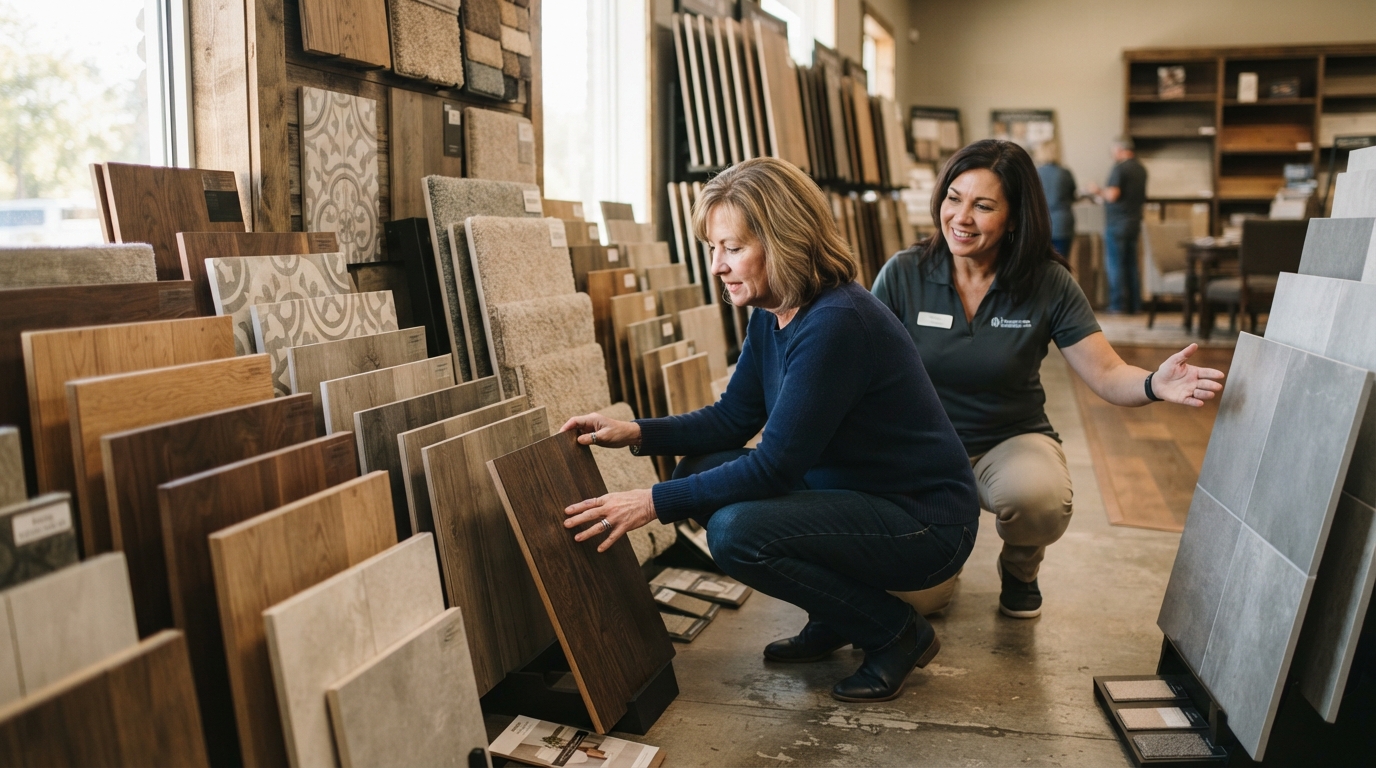
Flooring choices affect daily life in ways that are easy to overlook during a quick showroom visit. A material that looks appealing in a sample box may behave differently once installed under furniture, foot traffic, or fluctuating indoor humidity. Working through these variables with a Local Flooring Shop before committing to a product can reduce the chance of replacing flooring prematurely.
Matching Flooring Materials to Room Function
Different rooms place different demands on flooring, and no single material performs equally well everywhere in a home.
- Kitchens and bathrooms need moisture-resistant options such as tile, vinyl, or certain engineered woods.
- Living rooms and bedrooms often suit solid hardwood, laminate, or carpet depending on comfort preference.
- Basements and entryways benefit from materials resistant to temperature shifts and ground moisture.
Carpet remains a common choice for bedrooms and living areas where softness and sound dampening are priorities. Hardwood and engineered wood are frequently selected for main living spaces due to their durability and resale appeal, while tile and vinyl are typical in wet or high-traffic zones.
Climate Considerations for Austin, TX Homes
Austin, TX experiences hot summers and periods of high humidity, both of which can affect how certain flooring materials expand, contract, or retain moisture over time. Solid hardwood, for instance, can be more sensitive to humidity swings than engineered wood or tile, which is a practical consideration for homeowners weighing long-term performance. According to the National Weather Service, Central Texas experiences seasonal humidity and temperature variation that can influence building materials indoors.
Homeowners in older housing stock around Austin, TX may also encounter subfloor irregularities that affect installation choices, particularly for rigid materials like tile or solid wood planks. A flooring professional can assess subfloor condition before recommending a material, which helps avoid issues after installation.
Comparing Common Flooring Materials
| Material | Best Use | Moisture Resistance | Relative Maintenance |
| Carpet | Bedrooms, living rooms | Low | Moderate (regular cleaning) |
| Hardwood | Living areas, dining rooms | Low to moderate | Moderate |
| Vinyl | Kitchens, bathrooms | High | Low |
| Tile | Bathrooms, entryways | High | Low |
This comparison is a general guideline rather than a fixed rule, since product quality and installation technique also influence long-term performance.
Business Info
Based in USA, Click Here To Visit America’s Carpet Outlet serves customers across Austin, TX, offering flooring material selection support without maintaining a physical branch in that service area. Information on flooring categories and service area details can be reviewed through America’s Carpet Outlet, which outlines the business profile associated with these services.
Frequently Asked Questions
What flooring material lasts longest in high-traffic homes? Tile and certain engineered wood products tend to hold up well under heavy foot traffic due to their hard, wear-resistant surfaces.
Is carpet a good choice for humid climates? Carpet can trap moisture more than hard-surface flooring, so rooms prone to humidity may benefit from vinyl or tile instead.
How do I know which flooring fits my budget and room type? Comparing material cost, moisture resistance, and expected lifespan for each room is the most practical way to narrow choices before purchasing.
Can old subfloors limit flooring material options? Yes, uneven or damaged subfloors can restrict certain installations, particularly rigid materials like tile or solid hardwood, until repairs are made.
Next Steps for Flooring Decisions
Comparing flooring materials based on a home’s specific rooms, climate conditions, and daily usage is a practical way to avoid premature wear and costly replacements. Homeowners researching local flooring options can Click Here to Visit America’s Carpet Outlet to review available services and service area information.