Bottom line:
- An accessory dwelling unit is a secondary, independent living space built on the same lot as an existing single-family home.
- California sets minimum size and approval standards for ADUs, though local zoning and site conditions still shape the final project.
- Manufactured or modular ADU construction can shorten build timelines compared with fully site-built units.
An accessory dwelling unit is a self-contained secondary residence, such as a backyard cottage, converted garage, or attached suite, built on the same lot as a primary home. For homeowners in Ventura County, CA weighing this option, understanding zoning rules, construction methods, and financing steps before breaking ground can prevent costly delays.
An Accessory dwelling unit can serve several purposes on a single property, from housing aging parents to generating rental income. Factory Home Source, based in Camarillo, CA, is one of the manufactured home dealers working with property owners on ADU projects across the region. Before committing to a design or builder, it helps to understand how these units are defined, regulated, and constructed.
How State and Local Rules Shape ADU Projects
California law requires cities and counties to approve qualifying ADUs through a streamlined, ministerial process rather than discretionary review. The California HCD Accessory Dwelling Unit Handbook outlines statewide standards local jurisdictions must follow when reviewing ADU and junior ADU applications.
Key statewide provisions homeowners should know include:
- Jurisdictions must allow detached ADUs of a minimum size, regardless of local lot coverage limits.
- Certain ADUs are exempt from additional parking requirements under specific conditions.
- Height limits for detached units are set at a base standard, with some allowances near transit corridors.
Local agencies in Ventura County, CA may still apply setback rules, utility connection requirements, and design review standards on top of these state minimums, so checking with the relevant city or county planning department remains a necessary step.
Construction Methods: Site-Built vs. Manufactured ADUs
The construction method chosen affects timeline, cost predictability, and on-site disruption. The table below outlines general differences between the two common approaches.
| Factor | Site-Built ADU | Manufactured/Modular ADU |
| Typical construction setting | Built entirely on the property | Built off-site, then installed |
| Weather exposure during build | Higher | Lower, since most work happens indoors |
| Timeline variability | Can extend due to weather, labor, inspections | Often more predictable once plans are approved |
| Customization | Fully custom design | Customizable within manufacturer specifications |
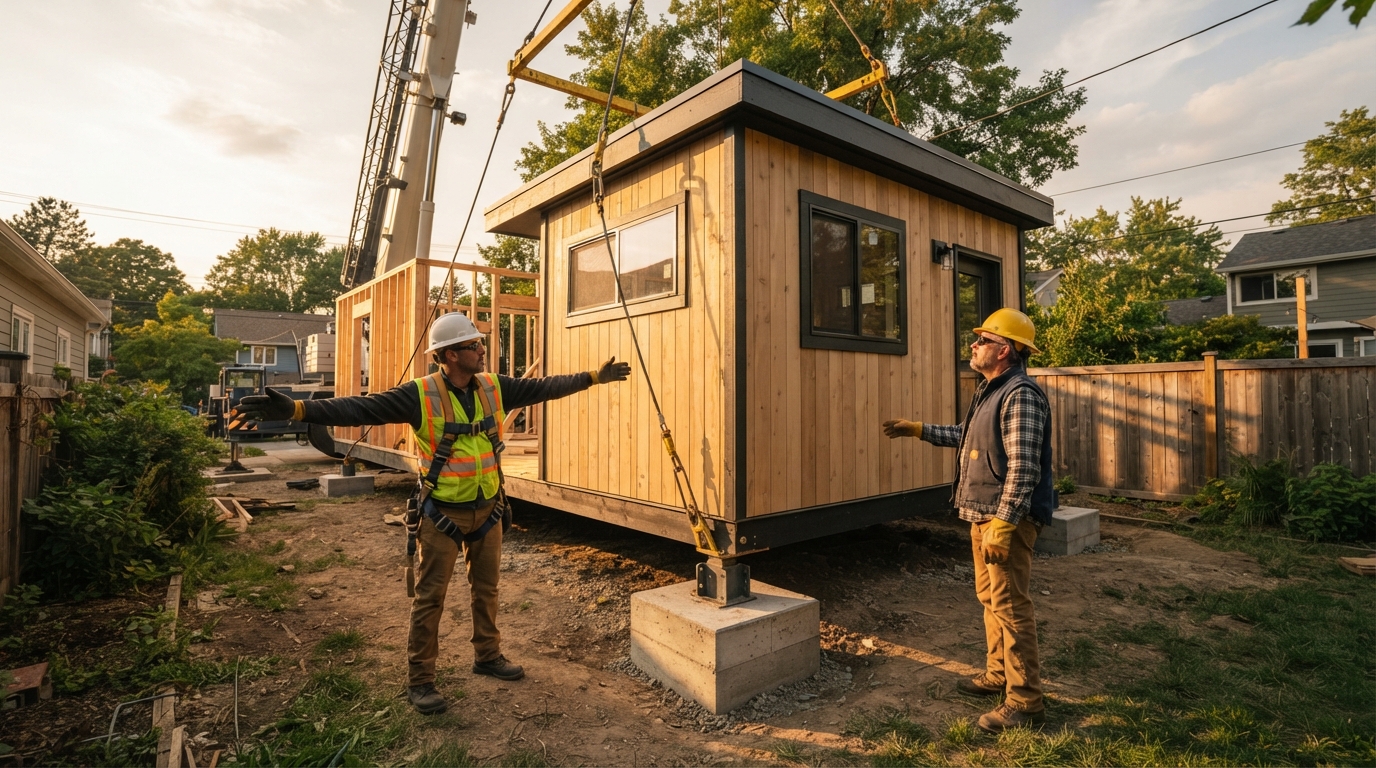
Manufactured ADUs are constructed in a factory setting and transported to the home site for installation, which can reduce exposure to weather delays common with traditional framing.
Planning Steps Before Breaking Ground
A smoother ADU project generally follows a defined sequence rather than starting with design decisions alone.
- Confirm zoning eligibility and setback requirements with the local planning department.
- Determine utility connection needs, including water, sewer, and electrical capacity.
- Select a construction method and obtain a realistic cost and timeline estimate.
- Secure financing or confirm available funds before finalizing design plans.
- Submit permit applications and track required inspections through completion.
Skipping early zoning confirmation is one of the more common reasons ADU projects stall, since design work completed before eligibility is confirmed may need revision.
Frequently Asked Questions
Does every property qualify for an ADU? Eligibility depends on lot size, zoning designation, and local development standards, which vary by city and county even though state law sets baseline allowances.
How long does an ADU project typically take? Timelines depend on permitting speed, construction method, and site conditions, with manufactured units sometimes installed faster once plans are approved and the foundation is prepared.
Can an ADU be rented out separately from the main home? Many ADUs are used as rental units, though local ordinances may include occupancy or rental restrictions that should be confirmed before leasing.
Is financing available specifically for ADU construction? Financing options vary by lender and may include home equity products, construction loans, or specialized ADU financing programs, so comparing terms before starting a project is advisable.
Business Info
Factory Home Source works with property owners on manufactured home ADU projects, serving customers across Ventura County, CA from its base in Camarillo, CA.
Current availability details for Factory Home Source are published for the local service area.