Essentially:
- Water conditioning treats hard water, iron, and other minerals that municipal treatment often misses, protecting plumbing and appliances.
- Methods range from salt-based ion exchange softeners to filtration systems targeting sediment, chlorine, and odor.
- Kalamazoo, MI households commonly deal with mineral-heavy water that benefits from an assessed, property-specific treatment plan.
Water conditioning refers to treating household or commercial water supplies to reduce hardness, iron, and other minerals before they cause scale buildup, appliance wear, or plumbing damage. For properties relying on well water or municipal sources with elevated mineral content, a conditioning system is typically installed at the point water enters the building.
Water Conditioning addresses issues that standard water treatment does not always resolve, including calcium and magnesium deposits, iron staining, and sediment. Many properties draw from sources carrying these minerals in amounts high enough to affect fixtures, water heaters, and laundry over time.
What Water Conditioning Actually Does
Conditioning equipment is designed to change the mineral content or filter out specific contaminants before water reaches household taps and appliances. The exact approach depends on what is found during a water quality assessment.
- Ion exchange softeners swap calcium and magnesium ions for sodium or potassium, reducing scale formation.
- Filtration systems target sediment, chlorine taste and odor, or iron staining.
- Combination systems pair softening with filtration for properties facing multiple water quality concerns.
According to EPA guidance on water softeners, nearly all residential softeners rely on ion exchange to regenerate on a set schedule, and a typical unit uses between 20 and 70 gallons of water per regeneration cycle. That water use detail matters when comparing system sizes, since an oversized or poorly matched softener can waste water without improving results.
Why Hard Water Is a Common Concern in Kalamazoo, MI
Hard water is widespread in parts of the Midwest where groundwater picks up minerals as it moves through rock, soil, and riverbeds. Properties in and around Kalamazoo, MI often draw from sources carrying hard minerals, iron, and other impurities that standard municipal treatment does not fully address.
| Hardness Level | Grains Per Gallon | Typical Effect |
|---|---|---|
| Slightly hard | 3-7 | Minor spotting on glassware |
| Hard | 10-15 | Scale buildup, appliance strain |
| Very hard | Above 15 | Heavy scale, softening strongly recommended |
A targeted water conditioning plan addresses these issues at the source rather than treating symptoms one fixture at a time. Testing water before selecting equipment helps confirm whether hardness, iron, or another contaminant is the primary driver of the problem.
What to Expect During the Process
A conditioning project generally follows a predictable sequence, starting with testing and ending with ongoing maintenance.
- Water quality testing to identify hardness levels, iron content, or other contaminants.
- Equipment selection sized to household water use and the specific minerals found.
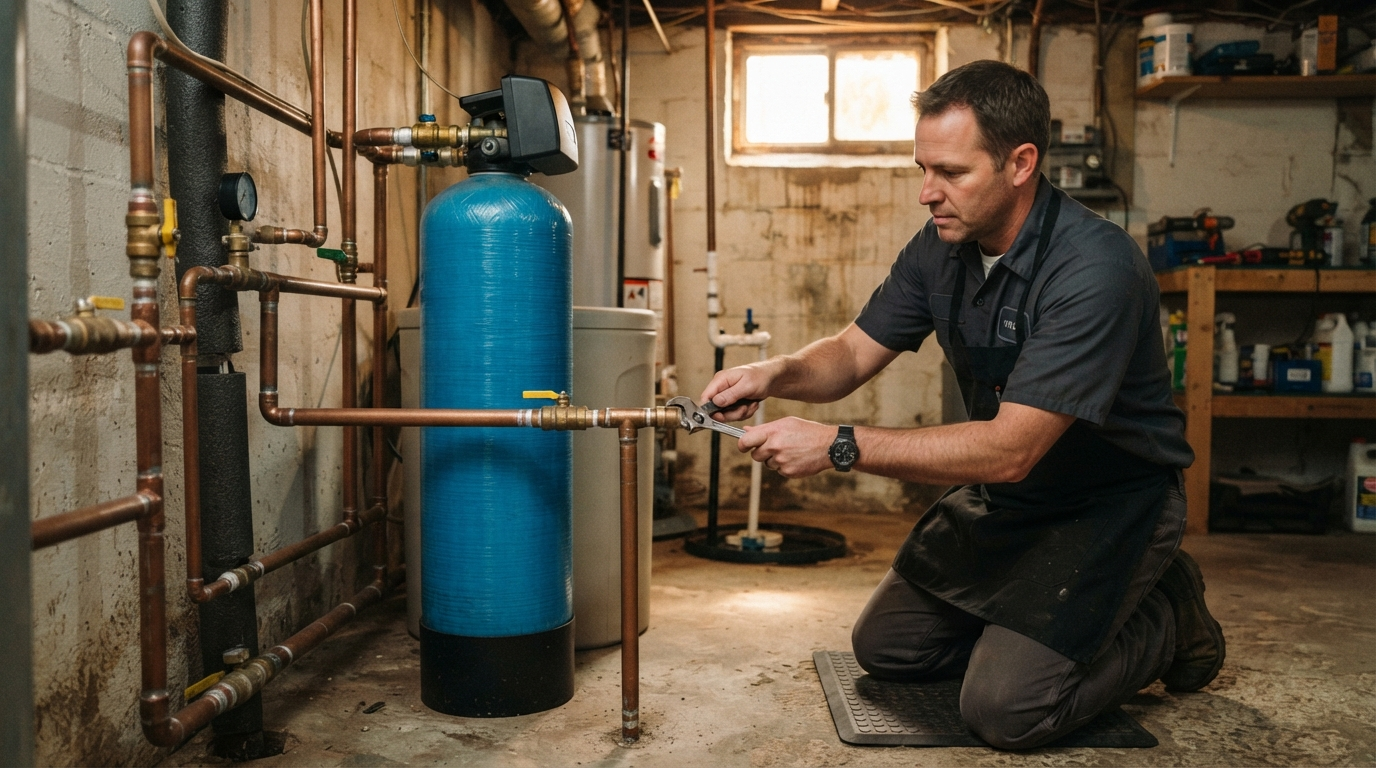
- Installation at the main water line entry point.
- Periodic maintenance, including salt refills for ion exchange systems and occasional resin bed checks.
Based in Portage, MI, service for water conditioning extends to properties across Kalamazoo, MI, where well water and older municipal infrastructure make mineral content a recurring concern for homeowners. Commercial properties typically need systems scaled to higher water demand, so an assessment usually looks at daily usage volume alongside water hardness readings.
Frequently Asked Questions
How do I know if I need a water softener or a filtration system? A water test identifies whether hardness, iron, sediment, or chlorine taste is the main issue, and that result points toward softening, filtration, or a combination system.
Does water conditioning affect drinking water safety? Hardness itself is not considered a health risk, though softened water can add sodium; residents on sodium-restricted diets sometimes keep an unsoftened tap for drinking or cooking.
How often does a water softener need maintenance? Salt-based systems need periodic salt refills and occasional checks of the resin bed and brine tank, with frequency depending on household water use and incoming hardness levels.
Can water conditioning help older plumbing? Reducing mineral content can slow further scale buildup in pipes and fixtures, though existing buildup in older plumbing may require separate repair or replacement.
Water conditioning plays a practical role in protecting plumbing and appliances in areas with mineral-heavy water supplies, and the right system depends on testing results rather than assumptions about water quality. Published service details for Dan Wood Company cover the area served around Kalamazoo, MI.