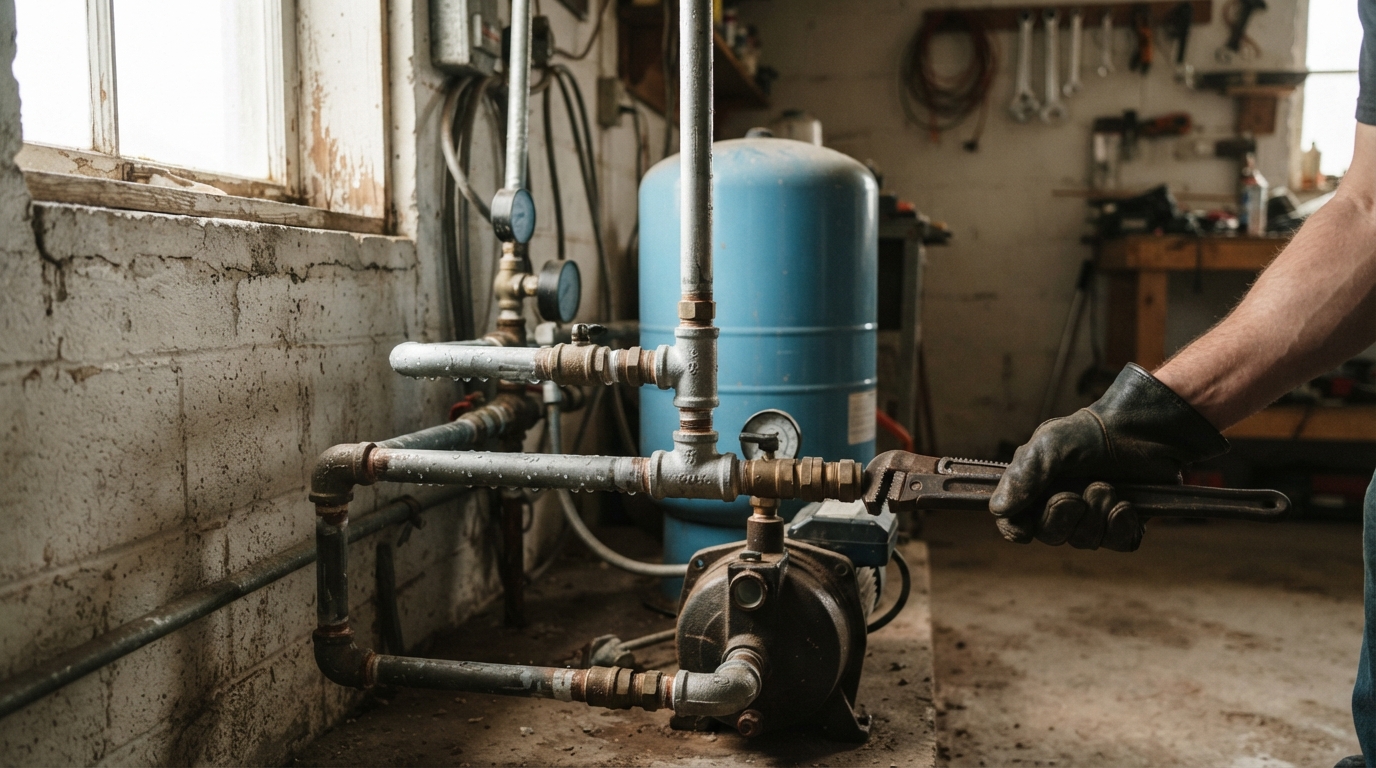
Snapshot:
- A failing well pump usually shows warning signs first, including inconsistent water pressure, cloudy water, or a pump that cycles on and off too often.
- Professional diagnosis identifies whether the issue is the pump, pressure tank, wiring, or well itself before any repair begins.
- Routine inspection and maintenance can extend pump life and help homeowners avoid emergency repairs during Montana’s cold winter months.
Homeowners searching for dependable well pump repair or replacement want one thing: clean, consistent water pressure restored without guesswork or unnecessary costs. Getting that result starts with understanding what a pump failure actually looks like and why professional diagnosis matters before any part gets replaced.
Well systems in north-central Montana face real seasonal stress, from hard freezes in winter to mineral-heavy groundwater year-round. Homeowners who need Well Pump Service in Great Falls, MT typically notice a pattern of symptoms before a full system failure occurs, which makes early recognition one of the most practical tools a property owner has.
Recognizing When a Well Pump Needs Attention
Most pump problems do not happen overnight. They build gradually, and catching the early signals can prevent a complete loss of water service.
Common warning signs include:
- Water pressure that fluctuates or drops noticeably during use
- A pump that short-cycles, turning on and off repeatedly in quick succession
- Strange noises coming from the pump or pressure tank area
- Air sputtering from faucets, which can indicate the pump is pulling air instead of water
- A sudden spike in electricity usage tied to the well system
Any one of these symptoms on its own may not mean an emergency, but a combination of two or more usually points to a mechanical issue that needs a trained eye.
What a Professional Diagnosis Actually Involves
Diagnosing a well pump problem correctly requires more than listening for noise or checking pressure at a faucet. A technician typically evaluates the entire water delivery system as a connected unit rather than treating the pump in isolation.
Key diagnostic steps generally include:
- Checking pressure tank settings and tank bladder condition
- Testing electrical connections and the pressure switch
- Inspecting the well casing and wiring for damage or wear
- Confirming water yield from the well itself, since a pump can appear faulty when the actual limitation is the aquifer’s output
Groundwater availability and well yield are well-documented variables that affect pump performance, and the U.S. Geological Survey’s groundwater resources overview explains how aquifer conditions can directly influence how much water a well can reliably produce. This is why skipping straight to a pump replacement without checking the source can lead to a repeat problem later.
Repair Versus Replacement: Making the Right Call
Not every pump issue requires a full replacement. The right decision depends on the pump’s age, the extent of damage, and whether the well itself can still support consistent output.
| Situation | Likely Approach | Why |
| Pump is under 10 years old with an isolated part failure | Repair | Cost-effective and often restores full function |
| Pump has multiple failures in a short time span | Replacement | Signals broader wear across the system |
| Low water yield traced to the well, not the pump | Well evaluation first | Replacing the pump will not fix a supply issue |
| Pressure tank is waterlogged or corroded | Tank service or replacement | Tank condition directly affects pump cycling |
A technician who inspects the full system before recommending a fix helps homeowners avoid paying for a new pump when the actual problem lies elsewhere, such as a worn pressure switch or an aging tank.
Maintenance Habits That Extend Pump Life
Routine attention to a well system reduces the odds of a sudden breakdown, particularly before winter when frozen components can cause additional strain.
Practical habits worth adopting:
- Schedule a pressure tank check annually to confirm the air charge is correct
- Listen for cycling patterns and address short-cycling early rather than waiting
- Keep the wellhead area clear of debris and insulated against freezing temperatures
- Track water clarity and note any sudden changes in taste, color, or odor
These habits do not eliminate every risk, but they give homeowners an early warning system of their own, which pairs well with periodic professional checkups.
Frequently Asked Questions
How do I know if it is the pump or the pressure tank causing low water pressure? A technician can test both components separately, since a waterlogged pressure tank often mimics the symptoms of a failing pump, including frequent cycling and weak flow.
Can a well pump fail without any warning signs? It is uncommon. Most failures follow a pattern of fluctuating pressure, unusual noise, or cycling issues in the weeks before a complete stoppage.
Does well pump service include checking the well itself, not just the pump? A thorough inspection typically includes assessing well yield and casing condition, since the pump’s performance depends on the water source behind it.
How often should a well pump system be inspected? Annual inspections are a common recommendation, with additional checks after extreme weather events or noticeable changes in water pressure.
Homeowners dealing with inconsistent water pressure or a pump showing early warning signs have the most to gain from acting before a full failure occurs. Western Water Wells, listed on its Google Business Profile for Great Falls, offers an example of the kind of local, system-wide approach to diagnosis described throughout this guide. Scheduling an inspection sooner rather than later remains the most reliable way to protect both water quality and the lifespan of a well system.